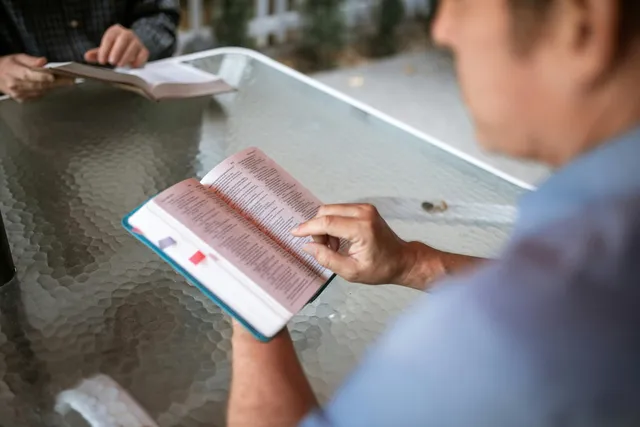
There is a reason the Psalms have been called the prayer book of the Bible. Across centuries, believers have turned to them when words failed, when hearts were heavy, when joy overflowed. The Psalms are not polished theses on theology; they are cries of the soul-honest, raw, beautiful-and they teach us how to bring every emotion before God. Whether you find yourself in joy or sorrow, silence or chaos, there are prayers from the Psalms you can use today, right where you are.
The Heartbeat of Prayer
The Psalms invite us into a rhythm of prayer that holds nothing back. David's voice rises from the pages not as a distant saint but as a fellow traveler. He speaks of despair and deliverance, fear and faith, anguish and assurance. He teaches us that prayer is not about perfection-it's about presence. It's about being honest with the One who already knows.
Prayer is not a performance; it is participation in the divine conversation. And in that conversation, the Psalms serve as both guide and gateway. They show us how to approach the throne of grace with authenticity and trust.
When You Need Peace
There are moments when the noise of life feels deafening. Anxiety fills the spaces where peace used to live. In those moments, the Psalms whisper, "Be still." Psalms 46 reminds us that God is our refuge and strength, an ever-present help in trouble. When the ground shakes beneath our feet, these ancient words steady us.
Imagine beginning your day with a prayer drawn from Psalms 46-acknowledging the storm, yet declaring the steadfastness of God. Peace often begins not with the disappearance of trouble, but with the awareness of divine presence in the midst of it. The Psalmist knew that peace doesn't come from circumstance, but from anchoring our hearts in God's unchanging character.
A Prayer for Peace
"Lord, in the chaos around me, help me remember that You are my refuge. Quiet my thoughts, calm my spirit, and let me know that You are God. In Your care I rest."
When You Feel Forgotten
Few words cut as deep as, "How long, O Lord?"-the cry that begins Psalms 13. Every believer has whispered that question in one form or another: How long until the answer comes? How long until healing arrives? How long until I see You move?
The beauty of Psalms 13 lies in its movement from despair to trust. It begins in lament but ends with praise: "I will sing to the Lord, for He has been good to me." That is not denial; it is defiant faith. It is the courage to praise in the tension, to sing before the deliverance, to trust when the evidence hasn't yet changed.
You can make that prayer your own when God seems silent. It's a reminder that faith doesn't erase emotion-it sanctifies it. God can bear the weight of your questions.
A Prayer for When You Feel Forgotten
"Lord, how long must I wait? My heart feels weary and my hope thin. Yet I will trust in Your unfailing love. Remind me that You see me, that You hear me, and that You are working even when I cannot see."
When Gratitude Overflows
The Psalms don't only echo sorrow-they sing with unrestrained joy. Psalms 100 calls us to enter God's presence with thanksgiving, to serve the Lord with gladness. Gratitude in the Psalms is not a polite gesture; it is a vibrant declaration of trust. It is saying, "God has been faithful-and forever will be."
When we pray prayers of thanksgiving from the Psalms, we realign our hearts. We remember that every breath, every sunrise, every answered prayer is gift. Gratitude transforms ordinary days into holy ground. It opens our eyes to beauty and generosity already woven through our stories.
A Prayer of Thanksgiving
"Thank You, Lord, for Your goodness and mercy that follow me each day. Thank You for unseen blessings and quiet mercies. May my life be a Psalms of praise to You."
When You've Fallen Short
Psalms 51 is one of the most beloved-perhaps because it holds our most human confession. David, broken by his own sin, falls before God and prays for mercy: a clean heart, a renewed spirit, a restored joy. His words remind us that repentance is not about shame; it's about returning home.
Within Psalms 51 lies the pattern of true restoration: honest acknowledgment, deep sorrow, and renewed hope. There is no pretending here, no self-justification. There is simply a man aware of his failure yet pursuing the mercy that only God can give.
When you've stumbled, the Psalms remind you that grace is not in short supply. God specializes in making new beginnings from brokenness.
A Prayer of Repentance
"Have mercy on me, O God, according to Your steadfast love. Wash me from my faults, renew my spirit, and restore the joy of being Yours again."
When Fear Takes Hold
Fear is a language the human heart knows too well. Psalms 27 offers the antidote: "The Lord is my light and my salvation-whom shall I fear?" It's not a denial of fear's existence but a declaration that it will not have the final word.
Faith begins not when fear disappears, but when God becomes bigger in our sight. When David spoke these words, he was still surrounded by threats. Yet he chose a posture of confidence: dwelling in God's presence, seeking His face, finding courage in His beauty.
When you whisper these words in your own fear, you are joining a chorus of believers through time who have learned to exchange trembling for trust.
A Prayer for Courage
"Lord, be my light when all seems dark. Be my salvation when I tremble. Teach my heart to see You more clearly than I see the storm around me."
Finding Praise in the Ordinary
Not every prayer needs to come from the edge of crisis. Some are born in the quiet-ordinary moments made sacred by attentiveness. Psalms 8 marvels at God's creation: the stars, the moon, and humanity's surprising place within it all. Praise grounds us in wonder. It restores perspective and names the goodness we too easily overlook.
The Psalms teach us that prayer is not reserved for holy places or holy moments. You can lift a Psalms of praise while washing dishes, walking the dog, sitting in traffic. God inhabits the praise of His people not because it's perfectly sung, but because it's sincerely offered.
A Prayer of Everyday Praise
"O Lord, our Lord, how majestic is Your name in all the earth! May my words, thoughts, and small acts today glorify You."
When You Need Guidance
Psalms 25 holds the longing of a heart seeking direction. "Show me Your ways, O Lord; teach me Your paths." This is a prayer for every crossroad, every difficult decision, every uncertain tomorrow. We seek wisdom not merely to make the right choice, but to walk in communion with God Himself.
Guidance, in the Psalms, is not transactional. It is relational. God's guidance flows from His goodness, not from our perfection. When we trust His character, we find our confidence even before clarity comes.
A Prayer for Guidance
"Lord, lead me in Your truth and teach me. Guard my heart from haste or fear. I believe You will guide me because You are good."
When You Need to Remember God's Faithfulness
Psalms 103 is a sweep of praise that begins with memory: "Bless the Lord, O my soul, and forget not all His benefits." Forgetting is easy. Life moves quickly, and yesterday's miracles fade under today's concerns. But the Psalmist calls us back-to remember forgiveness, healing, redemption, steadfast love. Memory becomes worship when it reminds us who God has always been.
Remembering is an act of resistance against despair. It's how we keep testimony alive. When we recall the faithfulness of God, we reawaken hope for what's to come.
A Prayer to Remember God's Faithfulness
"Lord, remind me of Your goodness. Let gratitude rise in me as I recall the ways You've provided, forgiven, and led me. Teach me to trust You again."
The Psalms as a Lifelong Companion
You can travel the entire landscape of the human heart within the Psalms: longing, doubt, joy, worship, anger, awe, grief, gratitude. They are a mirror for the soul and a map to God's presence. Whether whispered in crisis or sung in thanksgiving, these prayers endure because they express what is timeless about our condition and what is eternal about God's mercy.
As you pray the Psalms, allow them to shape your own language of faith. Let them be more than ancient poetry-let them become your daily breath, your inner vocabulary of trust. They train us to pray honestly, to hope fiercely, and to love God with the whole heart.
Living the Psalms Today
The Psalms do not promise that life will be easy. But they promise that we will never walk it alone. Their authors faced danger, betrayal, and despair, yet they found in God a steadfast companion. That is as true today as it was then.
Perhaps that is the enduring invitation: to bring our lives-messy, magnificent, unfinished-into conversation with the eternal. To say with the Psalmist, "My times are in Your hands," and mean it. To discover, again and again, that the God who heard David still hears us.
So today, take one Psalms. Pray it simply. Let its words shape yours. Allow its music to echo through the ordinary rhythm of your day. You may find that the prayer you begin in the morning becomes the peace you carry at night.
The Psalms are not merely prayers from yesterday-they are the language of faith for today.