The phrase "Kingdom of God" threads through the heart of Jesus' teaching like a golden cord. It is the central motif of His message, the theme He announced from His first sermon to His final words before ascending to heaven. Yet, for all its prominence, it remains one of the most mysterious and transformative ideas in Scripture. When Jesus spoke of the Kingdom, He wasn't referring to a distant empire or a political regime. He was unveiling a reality that turns the world's values upside down and invites us to live under a new kind of rule-the reign of God in human hearts, communities, and ultimately, in all creation.
A Kingdom Not of This World
When Jesus stood before Pilate and declared, "My Kingdom is not of this world" (John 18:36), He was not rejecting the world He came to save. He was redefining power itself. The Roman governor represented empire-the kind that conquers with armies and rules through coercion. Jesus represented another kind of authority-the kind that conquers by love, humility, and truth. The Kingdom of God is a reign, not a realm; it's wherever God's will is done.
In fact, Jesus' earliest proclamation was disarmingly simple: "The Kingdom of God has come near. Repent and believe the good news" (Mark 1:15). That nearness-God drawing close, heaven touching earth-was something the crowds could see and hear in Him. In His words, in His healings, in His welcome of the outcast, the Kingdom was breaking in. He didn't just talk about heaven someday; He revealed heaven's rule today.
The Kingdom Revealed in Parables
Jesus loved to describe the Kingdom through stories-parables that invited the listener to imagine, to wrestle, and finally, to see. Each one was a window into the Kingdom's texture and tone. The Kingdom, He said, is like a mustard seed: tiny, almost invisible at first, but destined to become a great tree (Matthew 13:31-32). It's like yeast that works through dough, silently transforming from within (Matthew 13:33). In other words, the Kingdom grows quietly but powerfully.
One of His most striking parables was that of the hidden treasure and the pearl of great price. In both, the seeker finds something so extraordinary that everything else loses its value by comparison. This is the response the Kingdom demands: not half-hearted allegiance, but total reorientation of one's priorities. To find the Kingdom is to discover what life is truly for.
The Scandal of the Kingdom
But the Kingdom also offended many. It welcomed the wrong people, and it seemed to break all the predictable rules. The first were last; the humble were exalted; the sinner who repented was closer to God than the self-righteous who prided themselves on keeping the law. When Jesus said that the tax collectors and prostitutes were entering the Kingdom ahead of the religious leaders (Matthew 21:31), He wasn't mocking devotion-He was exposing hypocrisy.
The Kingdom forced everyone to make a decision. Would they cling to pride and power, or surrender to mercy and grace? It still asks that question today.
The Kingdom Within and Among Us
When the Pharisees once asked Jesus when the Kingdom of God would come, He answered, "The Kingdom of God is not coming with things that can be observed; for in fact, the Kingdom of God is within you" (Luke 17:20-21). The word can also mean "among you," and perhaps both senses matter. The Kingdom takes root in hearts that yield to God's reign, but it also flourishes in communities that embody His love.
The Kingdom of God begins where surrender begins. It is the life of God taking charge where we once ruled ourselves. It's the patient work of transformation, the Spirit reshaping our desires, our fears, our ambitions, until we begin to reflect the values of the King: mercy instead of judgment, generosity instead of greed, forgiveness instead of vengeance.
Living the Kingdom Today
Jesus didn't only preach about the Kingdom-He lived it. Every meal He shared with sinners, every act of healing, every word of compassion was a glimpse of what life under God's reign looks like. Where others saw brokenness, He saw beloved children of God. Where others enforced exclusion, He built inclusion. The Kingdom, then, is not escapism from the world; it's the invasion of heaven's compassion into the world's wounds.
Kingdom Values Turn the World Upside Down
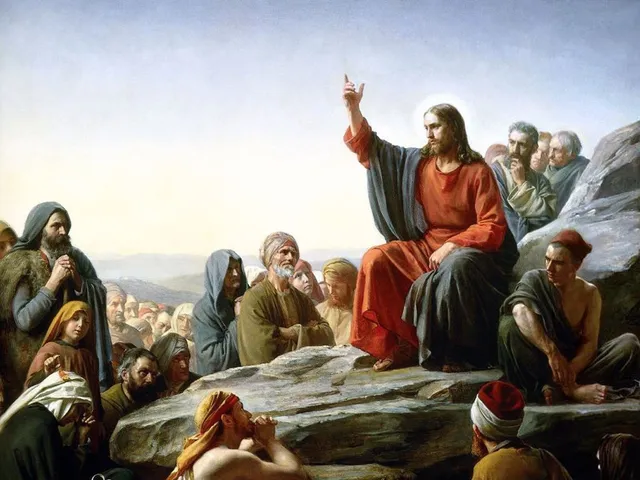
In the Sermon on the Mount, Jesus painted a portrait of Kingdom citizens-the poor in spirit, the meek, the merciful, the pure in heart, the peacemakers. These aren't passive virtues; they are the posture of those who trust God more than they trust their own strength. The Kingdom life reverses the world's logic. Instead of taking, it gives. Instead of climbing, it kneels. Instead of demanding service, it serves. When we pray, "Your Kingdom come, your will be done, on earth as it is in heaven" (Matthew 6:10), we are inviting God's agenda to take over our lives and our neighborhoods.
The Already and the Not Yet
One of the beautiful mysteries of the Kingdom is its tension between the present and the future. Jesus announced that the Kingdom was already among us-but He also taught His disciples to pray for its coming. Theologians call this the "already and not yet" dimension of God's reign. It's already begun through Christ's life, death, and resurrection, but its fullness awaits His return.
This tension keeps us both grounded and hopeful. We see glimpses of the Kingdom whenever love triumphs over hate, whenever justice rises for the oppressed, whenever forgiveness disarms the power of evil. But we also know that the world is still groaning, waiting for its restoration. Following Jesus means we live between promise and fulfillment, sowing seeds of the Kingdom even in rocky soil.
The Kingdom and the Cross
At the heart of the Kingdom stands a cross-an instrument of suffering that became the throne of glory. To many, this seemed like failure; to Jesus, it was the coronation of love. When He was lifted up on the cross, the world saw what divine rule truly looks like: self-giving love that conquers evil not by force but by forgiveness.
This is why Jesus called His followers to take up their cross daily. To live in the Kingdom is to walk the way of the cross. It is costly, but it leads to life. It's the paradox at the core of the gospel: we lose our lives to find them, we die to live, and we serve to reign. The cross reveals that the Kingdom's power is not domination but redemption.
The Kingdom as Hope for the World
Jesus' vision of the Kingdom was never limited to individuals alone. It carried social, communal, even cosmic implications. He envisioned a restored creation-people reconciled to God and to one another, peace where there was conflict, justice where there was oppression. The prophets had dreamed of such a day, when swords would be beaten into plowshares and the earth would be filled with the knowledge of the Lord. Jesus declared that this dream was beginning with Him.
The Church, then, is meant to be a preview of that coming reality-a community that lives by the values of the Kingdom before the rest of the world believes they're possible. Every act of love, every meal shared, every injustice challenged becomes a signpost pointing toward God's future.
Becoming Kingdom People
To follow Jesus is to become an agent of His Kingdom wherever we go. This doesn't require a pulpit or a platform-it requires a heart aligned with heaven's rhythm. Parents nurturing children in love, workers showing integrity in their jobs, believers forgiving their enemies and serving the marginalized-all these become ways the Kingdom breaks in.
The Kingdom of God is not something we build by human effort; it's something we receive and embody by grace. Our role is to be faithful witnesses-to live now as if God's rule were already complete, trusting that one day, it will be. Jesus' parables of growth remind us that even small acts of faith can carry eternal weight. A seed planted in hope, a word spoken in truth, a prayer whispered in faith-these are Kingdom moments.
Living in the Light of the King
Ultimately, the Kingdom is inseparable from its King. It's not just a set of principles; it's the presence of a Person-Christ Himself reigning in our hearts. To live in the Kingdom is to live in communion with Him, to walk daily in the assurance that His love governs our story and His power sustains our mission. The Kingdom is not a dream we chase; it's a reality we enter through trust in Jesus.
And so the prayer that Jesus taught us becomes the rhythm of our lives: "Your Kingdom come." Each repetition is both a cry and a commitment-a cry for God to renew the world, and a commitment to live as citizens of His reign even now.
The Kingdom Breaking In
The Kingdom of God is not a secret to decode nor a destination to find; it is a relationship to embrace, a calling to live out. Whenever we choose forgiveness over bitterness, generosity over envy, courage over fear, we declare that Jesus is Lord and His Kingdom is here. The mustard seed grows; the yeast rises; the treasure shines beneath the soil of everyday life.
So let the words of Jesus echo through your day: "The Kingdom of God has come near." It's near when you stretch out a hand to help another. It's near when you pray for the brokenhearted. It's near when you live as though heaven's values already govern your heart. And one day, when the King returns, every act of love done in His name will be gathered up into His glory. Then the prayer will at last be fulfilled: "The Kingdoms of this world have become the Kingdom of our Lord and of His Christ, and He shall reign forever and ever."