The early followers of Jesus lived between two worlds: one ruled by Caesar, the other ruled by Christ. Everything about their existence seemed fragile - a small, misunderstood community surviving under the immense weight of the Roman Empire. Yet from this fragile beginning arose the most transformative movement in human history. As modern believers, we often look back and ask: how did they thrive amid such opposition, and could their way of life offer guidance for the Church today?
A Kingdom Within an Empire
The Roman Empire was a world of contradictions - vast, powerful, and efficient, yet deeply unjust and idolatrous. Its roads stretched across nations; its legions imposed peace through might. Into that world came the gospel - not as a sword, but as a whisper of hope. The early Church didn't conquer with armies; it conquered with love.
The first Christians understood themselves as citizens of another realm. Paul's letter to the Philippians reminds them that "our citizenship is in heaven" (Philippians 3:20). This identity shaped how they lived under Roman authority. They did not deny the empire's existence; they simply refused to bow to its ultimate claims. Their allegiance belonged to a higher King. In that quiet defiance was born a revolution no emperor could suppress.
Faith That Flourished Under Pressure
It is easy to forget that the early Church grew fastest not in comfort but under pressure. The persecution from emperors like Nero or Domitian was meant to crush the movement, yet instead it purified it. When faith was costly, it became precious. Believers met secretly, shared possessions, and cared for those society discarded. Their gatherings, often hidden in homes or catacombs, pulsed with courage and expectation.
Why did it grow? Because the people of Rome saw something genuine - a love that transcended fear. In a world of hierarchy and oppression, Christians called each other "brother" and "sister." They fed the poor, nursed the sick, and even buried strangers. When plague swept through the empire, many fled, but Christians stayed to serve. Their example spoke louder than any proclamation.
The Power of Unseen Influence
Rome was obsessed with visibility - temples, monuments, and triumphs. But Christianity worked in the unseen places: in kitchens, workshops, and whispered prayers. The Church's power wasn't in legislation but transformation. Every soul changed by Christ became a ripple in the empire's vast sea. Eventually, even emperors noticed. But by then, the movement had already reshaped the moral imagination of the ancient world.
Living as the Minority
Today, many believers express concern about being on the edges of culture - our values seem increasingly out of step with the surrounding world. Yet perhaps this is a moment not for fear but remembrance. The first Christians were always a minority. They influenced society not by blending in, but by being distinctly different.
They practiced holiness, not isolation. Their distinction came from imitation - not of culture, but of Christ. Their worship did not rely on temples of marble, but on hearts made new. Their strength was not in political favor but in spiritual faithfulness. What would it look like for today's Church to recover that posture?
Salt and Light in the Empire
Jesus described His followers as the "salt of the earth" and "light of the world" (Matthew 5:13-14). Notice how both images suggest quiet yet potent influence. Salt works by contact; light works by presence. In the Roman world, Believers were not loud in the marketplace of power, but they illuminated it simply by being there. Their honesty in trade, compassion for prisoners, and forgiveness of enemies embodied the gospel.
Could it be that modern believers are most effective not when they dominate public life, but when they embody Christ-like presence wherever they are - offices, homes, schools, and neighborhoods? The early Church seems to whisper a resounding "yes."
Community: The Church as Family
In a culture marked by isolation, the early Church's emphasis on fellowship was revolutionary. They shared meals, resources, and lives. Their gatherings were not simply religious events; they were family reunions in a weary world. Acts 2 paints a vivid picture of believers meeting "day by day," breaking bread, praising God, and finding favor even among those who didn't share their faith.
The early Church grew because it loved well. Converts weren't drawn by spectacle but by belonging. In the Roman Empire, where loneliness and hierarchy ruled, Christian community offered dignity and inclusion. Whether slave or noble, Jew or Gentile, they were one body in Christ (Galatians 3:28). This radical togetherness was itself evangelism - love incarnate in fellowship.
Witness Through Suffering
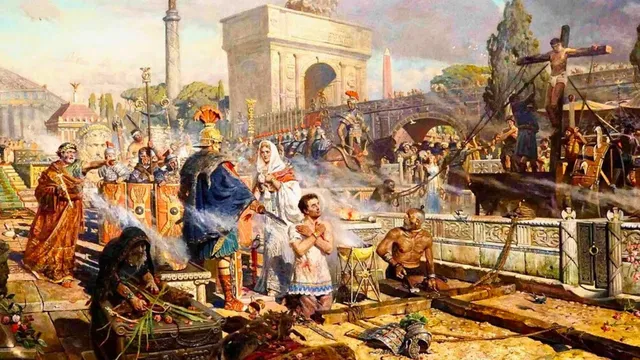
Persecution was not a tragedy for the early Church so much as a testimony. When believers faced lions in arenas or fire in courtyards, their courage drew eyes upward. The world had never seen people die like that - forgiving, singing, hoping. As Tertullian observed, "the blood of the martyrs is the seed of the Church." Their suffering became their sermon.
The Cross as Their Compass
In every age, the cross remains the shape of the Christian journey. The early believers grasped this deeply. To follow Jesus meant taking up that cross daily (Luke 9:23). They knew that resurrection life comes only through surrendered life. So they did not measure success in earthly power but in eternal faithfulness. They didn't win arguments - they won hearts by laying theirs down.
Perhaps this is the most enduring lesson from the Roman Church: the world is not changed by Christians who seek comfort but by those who seek Christ, even at a cost. When the Church suffers faithfully, it grows strong. When it compromises for convenience, it grows weak.
The Quiet Revolution of Hope
The empire offered "peace" through the sword - the famed Pax Romana - but it was peace built on submission. The gospel offered peace through reconciliation, grace, and truth. One demanded obedience; the other offered transformation. Over time, it was not the empire that converted the Church, but the Church that converted the empire, not through conquest but conviction.
That transformation began at the deepest level: hope. In a world where death ruled - through crucifixions, wars, and fear - Christians proclaimed life. Every Eucharist was an act of rebellion against despair. Every baptism proclaimed that Caesar was not Lord, Jesus was. Hope, whispered among the persecuted, became the anthem that would outlast the empire's might.
What About Us?
We stand centuries later, with technology and comfort unimaginable to the early believers. Yet in many ways, we encounter similar questions: How should we live faithfully in a world of shifting morals and monumental power? How do we maintain distinctive witness without retreating into fear?
The early Church offers a model, not of nostalgia, but of renewal. It reminds us that faith does not require dominance to be effective, only devotion. That truth and love still hold power in the quiet corners of the world. That belonging creates transformation more than argument ever could.
Rebuilding from the Inside Out
The empire outside us may look different - digital rather than marble, governed by media rather than emperors - but the call remains the same. The way forward for the modern Church is not louder rhetoric but deeper discipleship. It is not aligning with the empire's ambitions but shining light within its walls. The early Christians didn't try to make Rome more Christian; they tried to make Christians more Christ-like. The result changed history.
A Kingdom That Still Endures
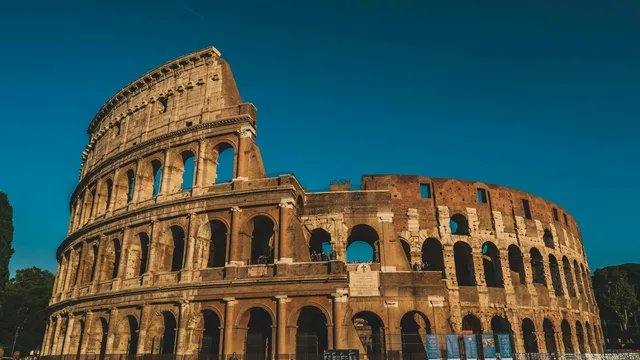
All empires rise and fall, but the Kingdom of God endures. The marble of Rome has crumbled, the Caesars are gone, yet the Church still sings the name of Jesus across every continent. That is no accident. It is the sign of a Kingdom that cannot be shaken. As believers today, we stand in that same story, inheritors of their faith and their mission.
So what can we take from their example? Live faithfully where you are. Love extravagantly in a world starving for kindness. Be willing to suffer for truth if needed. And let hope - the peculiar hope that Christ reigns - be your quiet rebellion against despair.
The Empire Within Us
Perhaps the real empire we must face is not external but internal - the empire of pride, fear, and self-reliance. The early Church dismantled Rome not by attacking it, but by transforming hearts. Let Christ's Kingdom take root in yours. Let His peace overthrow the tyranny of worry. Let His Spirit rule your decisions, your words, your love.
The early believers did not set out to make history; they simply set out to follow Jesus. And that faithfulness became history's turning point. May we, too, live so faithfully - quietly, courageously, generously - that when future generations look back, they might find in us what the Romans once saw: a people who, through love, revealed a better Kingdom still among us.