Raising children has always been one of the greatest privileges-and the most sacred responsibilities-entrusted to humanity. For Christian parents, teachers, and mentors, the calling goes even deeper: not only to nurture healthy, responsible citizens, but to raise disciples of Christ whose hearts beat in rhythm with His. Teaching children the ways of the Lord is not primarily about memorizing rules or behaviors; it's about shaping hearts that know, trust, and love God deeply. It's a lifelong journey that calls for wisdom, patience, humility, and-above all-a living example of faith.
The Sacred Calling of Spiritual Formation
In Deuteronomy 6, Moses charged Israel with one of the most profound commands ever spoken to families: to love the Lord wholeheartedly, and to teach His commandments diligently to their children-in the house, along the road, morning and night. This passage doesn't describe a rigid classroom schedule; rather, it paints a portrait of faith woven into the ordinary rhythms of life. Conversation, meal times, bedtime routines-all become opportunities for spiritual formation.
Children learn not only through words, but through what they see lived before them. When parents pray in times of joy or distress, when they extend forgiveness, when they serve others without recognition-those moments shape a child's understanding of what it means to walk with God. Children absorb spiritual truth not only from our instruction, but from our imitation of Christ.
Faith That Feels Real
For many children today, faith can easily become something distant or abstract. They may hear Bible stories in Sunday School, yet struggle to connect those ancient tales with their own modern experiences. The task before parents and mentors, then, is to make the faith tangible, relational, and alive.
Inviting Wonder and Curiosity
God designed children with natural curiosity-a deep desire to understand who they are and how the world works. When guided well, that curiosity can blossom into an awe-filled faith. Encourage their questions, even the hard ones. When a child asks, "Why does God let bad things happen?" resist the urge to offer a neat answer. Instead, journey with them through Scripture, prayer, and empathy. Let them see that faith doesn't silence questions-it welcomes them into deeper trust.
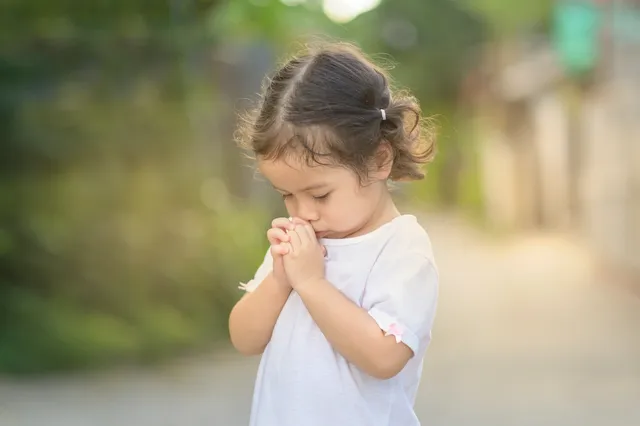
Sometimes, the most powerful response to a child's question is simply to say, "Let's ask God together." In that moment, prayer becomes a shared adventure, not a religious formality. It teaches them that our relationship with God is personal and open-ended, not mechanical or formulaic.
Making Scripture Come Alive
Children meet God in stories-and the Bible is full of them. When we tell the story of David facing Goliath or Esther's courage before the king, we're not just conveying history; we're passing on courage, faith, and moral vision. Use creativity-art, music, drama-to make these moments come alive. Let your home become a place where the Word is celebrated with joy, not just recited as duty.
And just as importantly, connect the stories to everyday life. When your child is afraid, remind them of Joshua's bravery. When they are generous with a friend, celebrate it as a reflection of Jesus' heart. This is how faith becomes real, integrated, and lasting.
Modeling Faith in Everyday Moments
Children are remarkably perceptive. They notice inconsistencies, pick up on emotional tones, and listen far more deeply than we often think. Every reaction, every act of generosity or carelessness, every word of gratitude or grumbling, speaks volumes about what we truly believe. Genuine teaching flows from integrative living-the kind of faith that is consistent in both public and private moments.
When we model patience instead of anger, prayer instead of despair, or integrity instead of compromise, we are writing on the tablets of their hearts. The apostle Paul urged believers to imitate him as he imitated Christ (1 Corinthians 11:1). Our children, likewise, will follow our example long before they follow our instructions.
The Power of Apology
One of the greatest lessons we can model is humility. When parents admit wrongs, ask forgiveness, and show repentance, it teaches children that grace is real. They learn that Christian faith isn't about perfection-it's about forgiveness and transformation. This gives them the freedom to be imperfect, to keep growing, and to rely on the mercy of God instead of self-effort.
Building Spiritual Habits That Last
Habits shape the soul. Just as athletes train their bodies through repetition, children form spiritual reflexes through habitual encounters with God. Family prayer times, Scripture reading, attending church together, serving others-these rhythms slowly build a spiritual foundation that will anchor them through future storms.
Family Worship as a Way of Life
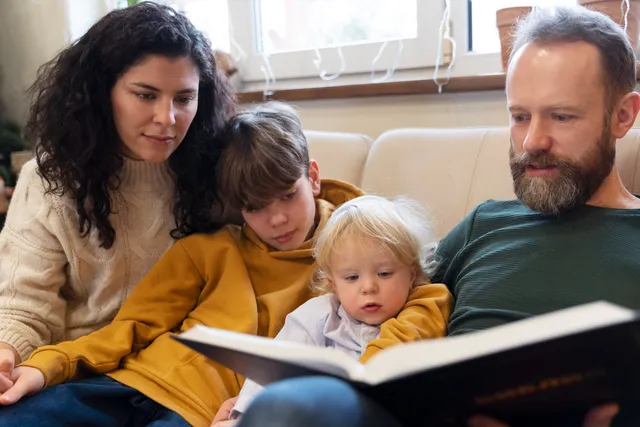
Family worship need not be elaborate. A few quiet minutes before bedtime, a Song of Songs on the morning commute, or reading a Psalms at breakfast can have lifelong impact. What matters is not formality, but faithful consistency. Children often treasure these small, repeated acts of devotion more than grand gestures. Through them, they internalize that God is not confined to Sunday mornings-He is present in every day and every setting.
When faith becomes a rhythm of life rather than a checklist, children grow up knowing that God is part of every moment-from laughter around the dinner table to tears in times of loss. These spiritual habits create sacred muscle memory that will guide them even when they step out into the wider world.
A Community that Nurtures Faith
Parents are the primary spiritual influencers in a child's life, but they are not meant to do it alone. The early Church grew strong because it functioned as a family-a body where older believers mentored the younger. When children grow up surrounded by a community of believers who model faith, serve together, and share wisdom across generations, they receive a powerful collective testimony.
The local church, youth ministries, and intergenerational friendships help reinforce what is taught at home. A child who sees faith lived out not just by their parents, but by other faithful adults, gains a larger vision of what it means to belong to the Kingdom of God. It takes a community to help each child understand that faith isn't just personal-it's communal, outward-facing, and missional.
Teaching Grace in a Performance World
We live in a culture where children are often measured by grades, trophies, and achievements. It's easy for them to believe that they must earn love or approval. The gospel cuts through this lie with a liberating truth: you are loved because of who God is, not because of what you do. Teaching this to children requires more than words-it requires consistent grace in our responses to their failures, struggles, and questions.
When a child experiences grace in their home or church, they begin to see God as He really is-patient, merciful, and near to the brokenhearted. This grace-centered approach doesn't excuse disobedience; rather, it provides space for growth, repentance, and restoration. It shows that even when we fall, God's arms remain open wide.
Centering Discipline in Love
God's discipline, Scripture tells us, is always rooted in love (Hebrews 12:6). Likewise, the discipline we give our children should never be about control or anger, but about guiding them toward righteousness and peace. Correcting a child with calmness, love, and explanation communicates that the goal is not punishment-it's growth. This helps them understand that God's boundaries are not restrictive fences but protective walls built by love.
Encouraging a Missional Heart
As children mature in their faith, it's vital they see that following Christ means serving others. Whether it's helping a neighbor, writing notes of encouragement, or praying for global missions, children can learn from an early age that faith is outward-facing. The joy of giving and serving helps them understand the heart of the Gospel.
Invite your children to be part of your acts of service. Let them pack food baskets, pray for missionaries, or help a younger child learn a verse. When they see faith expressed through compassion, it shapes their understanding of what it means to be the hands and feet of Jesus.
When the Journey Feels Imperfect
Every Christian parent or mentor knows moments of discouragement-times when a child seems resistant to faith or drifts away. In those moments, remember that the work belongs ultimately to God. We are gardeners, not makers of life. Our role is to plant, water, and nurture; the growth comes from the Spirit. God's timing is perfect, even when ours isn't. Sometimes seeds take years to germinate, but they remain alive beneath the soil of prayer.
Pray without ceasing. Love without conditions. Keep faith before your children, even when results are slow to appear. God's faithfulness often outlives our expectations and carries our children farther than we could ever imagine.
Living the Lesson
Teaching children the ways of the Lord is less about having all the right answers, and more about living with a right heart. It's about speaking Scripture into the ordinary spaces of life, modeling authenticity, and trusting in the transforming power of God's grace. When we live what we teach, children find that the Gospel isn't a distant story-it's a living reality unfolding in their home.
So let us teach faithfully, with joy and humility. Let our homes and churches become workshops of grace, where faith is not only taught but caught. And let us believe that the seeds we sow today will, in God's perfect time, bear fruit for His glory-children and generations walking steadfastly in the ways of the Lord.