Opening the Heart: The Quiet Power of Gratitude
There are moments when the noise of the world seems deafening-when the rush of responsibility, the ache of uncertainty, or even the monotony of ordinary life leaves us feeling unmoored. Yet in those moments, there exists a small, reachable doorway: gratitude. It does not require perfection or great achievement, only awareness. Prayers of gratitude remind us that even the smallest gifts-a breath, a sunrise, the warmth of another's hand-can fill the soul with light.
Gratitude-centered prayer has always been more than a polite ritual; it is an act of transformation. Neuroscientists have found that consistent gratitude practices change brain chemistry, easing anxiety and improving resilience. Spiritually, people across traditions have known this for centuries: to give thanks is to return to alignment with something larger than ourselves, something sacred and benevolent that sustains all that lives.
Thank you, Source of life, for the gift of this breath, this heartbeat, and the quiet strength that steadies me through both calm and storm.
This kind of prayer, when spoken honestly, can dissolve boundaries. It draws us away from comparison and into communion. And in that communion we rediscover joy. It may arrive softly, but once gratitude takes root, it changes the landscape within us-and among us.
The Ancient Thread: Gratitude Across Faith and Time
Throughout history, gratitude has served as a connective prayer across beliefs and cultures. The psalmists of ancient Israel sang songs of thanksgiving long before written philosophy captured the concept of happiness. "Give thanks to the Lord, for He is good; His love endures forever" (Psalms 107:1) was both a public and personal declaration that gratitude strengthens trust. In Buddhist traditions, giving thanks for simple presence-the mindfulness of breathing-cultivates compassion. Native American ceremonies weave thanksgiving into nearly every gathering, acknowledging all living relations as sacred kin.
These traditions teach us that thankfulness is never isolated. It points outward and inward simultaneously. By naming what we cherish, we remember that our lives interlock with others. Gratitude becomes not only recognition of blessings but devotion to stewardship: of the earth, of relationships, and of the self.
Thank you, Eternal Spirit, for the wisdom of those before me, for their prayers that rise still in the wind, guiding my own in humble reverence.
Blessed are You who plant seeds of awareness in every human heart, showing us that gratitude is the root from which peace grows.
When we trace this thread of gratitude through history, we realize that every faith tradition sees thanksgiving as both expression and remedy. It expresses joy, but it also remedies isolation, fear, and despair. It insists that meaning still abides, even when circumstances challenge us to see it.
The Inner Shift: What Happens When We Give Thanks
Modern science offers confirmation of what prayerful people have long felt. Studies reveal that practices of daily gratitude-whether through prayer, journaling, or reflection-activate areas of the brain associated with empathy and optimism. But beyond neuroscience, there is an unmistakable spiritual dimension: when we are thankful, our hearts soften.
So many of us live in a culture of scarcity, where the first instinct is to notice what is lacking. Gratitude reverses this perception. Each sincere thank‑you opens a small window, allowing light to enter the spaces we thought were barren. It reminds us that abundance is not measured by possession but by connection. We start to pay attention differently-to taste food more fully, to listen more deeply, to love more freely.
Thank you for the lessons disguised as obstacles, for the patience that trials teach, and for the quiet courage that gratitude brings forth from within me.
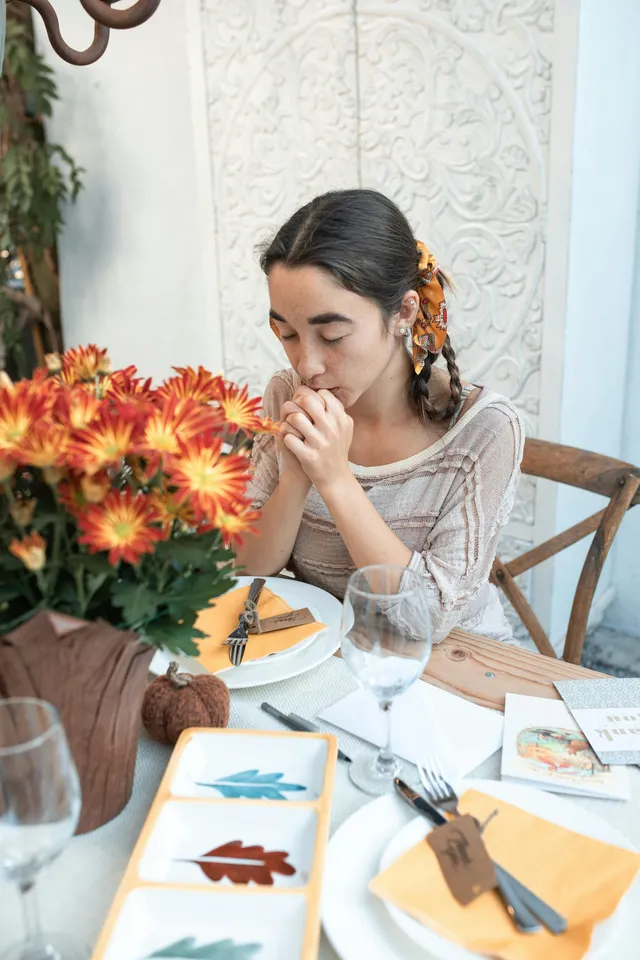
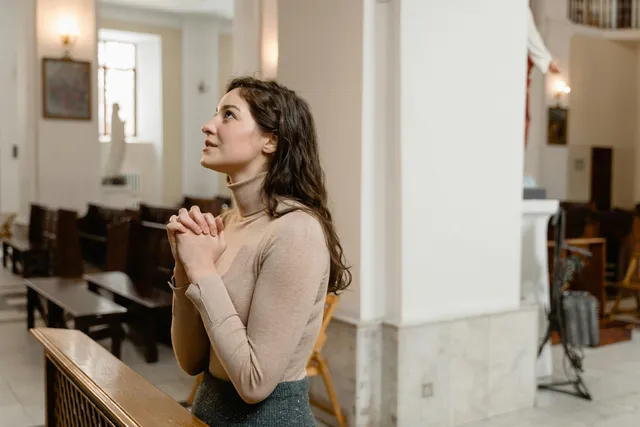
In prayer, this shift becomes tangible. It is in moments of simple awareness-hands folded, eyes closed, heart open-that we see how thankfulness redefines strength. We do not pray for life to be easy but for the wisdom to appreciate its complexity.
Thank you, Divine Teacher, for the grace of perspective, for showing that even in uncertainty, I am guided toward growth and peace.
Gratitude in Times of Difficulty
It might be said that gratitude is easy when all goes well. But the truer measure of its transformative power appears when difficulty arrives. To say thank you in suffering is not to trivialize pain, but to reclaim agency-to choose recognition over resentment. In this way, prayer becomes both anchor and sail: stabilizing and propelling us through storms.
Consider a woman caring for an ill parent. Her days are full of exhaustion, and yet, each night she whispers gratitude-for one more day together, for laughter remembered, for the strength that does not vanish though she feels weak. In that whisper lives her resilience; her prayer is not naïve hope, but active love.
Thank you for giving me courage when I am weary, for reminding me that compassion is stronger than fear, and for holding me when I have no words left.
Such gratitude becomes a quiet rebellion. In the face of hardship, it says: life without thanks is smaller, narrower, less whole. Every thankful prayer widens the horizon just enough for light to spill in again.
In darkness, I still praise You for the stars that keep their vigil; they remind me that even the night holds its blessings.
Through this lens, prayers of gratitude are not escapes from reality-they are commitments to face it with open eyes. When we give thanks amid loss, we find not explanation but endurance. Gratitude, in its deepest form, transforms suffering into understanding, and understanding into peace.
Morning and Evening: Rituals of Thankfulness
Some people keep gratitude in motion through ritual. Morning and evening prayers act as gentle bookends to the day, teaching our hearts to see both beginning and end as sacred. In the morning, gratitude greets possibility; in the evening, it releases control. Together, these practices cultivate presence.
A morning prayer might look like a stretch of sunlight across your pillow, a slow moment before the world begins: Thank you for another dawn. At night, it becomes surrender: Thank you for this day and the rest that heals it. These small rhythms train awareness into habit until gratitude feels as natural as breath.
At the hush before sunrise, thank You for new beginnings, for strength renewed with the light, and for the purpose that awakens with me.
At twilight, thank You for the lessons of this day, for kindness given and received, and for the peace that enfolds my dreams.
To maintain both prayers-morning and night-is to weave gratitude into time itself. Each repetition strengthens the pattern of appreciation that can carry us even through ordinary days. In a world that glorifies constant motion, these pauses restore the soul's rhythm.
Gratitude as Protection and Guidance
Many underestimate how gratitude serves as shield and compass. When we focus on what lifts us, we naturally guard against cynicism. It does not mean we ignore danger or deny injustice, but that we protect the heart's tenderness-its ability to perceive goodness despite brokenness. This protection leads to guidance, because to see clearly what is good is to recognize which path of action honors it.
Thank You for surrounding my journey with unseen guardians, for keeping my spirit safe from bitterness, and for guiding my steps toward kindness.
Each time we express thanks for protection already present-the safety of shelter, the comfort of friendship, the sense of guidance through intuition-we strengthen that very protection by naming it. Gratitude reminds us that we are not moving alone; it heightens awareness of the small ways grace works on our behalf.
Thank You, Holy Presence, for the moments of warning I heed, for the instincts You sharpen in me, and for the gentle corrections that keep me true.
In this light, gratitude is a way of receiving divine communication. By acknowledging how we are cared for, we become more capable of hearing direction when it comes. Gratitude does not just defend-it enlightens.
Gratitude and Relationships: The Sacred Gift of Connection
Prayerful gratitude isn't only vertical-between the soul and the divine-but horizontal, weaving tenderness throughout human connection. Giving thanks for others is one of the simplest and most profound ways to nurture love. When we express appreciation, we echo back someone's inherent worth. This acknowledgment deepens community as surely as water deepens roots.
Think of friends who listen, mentors who guide, strangers who smile, children who remind us how to play. Gratitude transforms these ordinary interactions into living testaments of grace. The more we see one another as blessings, the more easily we act from empathy rather than judgment.
For every hand that steadies me, every word that uplifts me, every shared laugh that heals me-thank You, Spirit of Love, for the miracle of relationships.
Thank You for teaching me to speak gratitude aloud, to let it ripple through my family and friendships, restoring kindness where silence once stood.
Indeed, gratitude is the language of belonging. It tells those we love that they matter, that their existence itself is a source of joy. When we give thanks for others, we remind them-and ourselves-that love is a living force, constantly renewed through acknowledgment.
The Courage to Be Grateful
Sometimes giving thanks feels like an act of bravery. To open our hearts to gratitude while uncertainty lingers demands faith in the unseen. But courage and gratitude are secret companions; one strengthens the other. When we dare to say, "I am thankful for what is," even without knowing what will come, we affirm trust in life's unfolding.
This trust is not blind optimism. It is the soul's decision to participate creatively with reality. To pray with gratitude in the midst of fear is to choose courage over withdrawal, to stay engaged with life's process of becoming. Gratitude gives energy to that resilience.
Thank You for the courage to keep believing, even when answers hide; for the quiet faith that endurance is itself a prayer of gratitude.
Thank You for transforming fear into strength, and uncertainty into openness, so that each step forward becomes an act of hope.
Every grateful heart is, in a way, heroic. It continues to bless the world, even when trembling. And through that ongoing blessing, fear begins to shrink-not through denial, but through trust.
When Gratitude Becomes Service
Grateful people rarely stop at words. Sooner or later, thankfulness longs to express itself through action. Acts of service, generosity, and compassion are tangible extensions of prayer. They are what happens when gratitude overflows its container and seeks new form. In serving others, we experiment with gratitude's full circle-how receiving and giving sustain one another.
Communities built around shared gratitude tend to be more resilient. They celebrate not from perfection but from perspective. Gratitude becomes a social glue: the energy that turns helping into humility, and compassion into collective joy.
Thank You for filling my hands with enough to share, for teaching me that giving multiplies abundance, and that compassion nourishes all who partake.
May every small kindness I offer become a prayer on behalf of those in need, bearing witness to the goodness that still moves through our world.
Service guided by gratitude is never a duty alone; it is pleasure and responsibility intertwined. It reminds us that the most sacred prayers may be the ones we enact rather than speak.
The Peace Beyond Words
There are seasons when words of prayer recede into quiet awareness. Gratitude becomes less about language and more about being. It resides in how we breathe, notice, and relate. These moments are contemplative rather than verbal-a peace that no phrase can completely describe.
Still, even in that silence, gratitude remains the steady pulse. It anchors peace not as an escape but as presence. Those who pray this way often describe a sensation of being held, as if the universe itself is whispering thanks in return.
Thank You for the peace that passes understanding, for silence that heals more deeply than speech, and for the stillness where I meet You most truly.
At such depth, gratitude ceases to be something we do and becomes something we are. It transforms identity itself: we are participants in grace, co‑creators of joy, witnesses of mercy. In peaceful gratitude, life feels whole again.
Living Every Day as Prayer
Ultimately, prayers of gratitude are not confined to specific moments-they weave their way through entire lives. Every mindful breath can become a thank‑you; every act of love, a sacred offering. When we cultivate awareness in this way, the boundary between prayer and daily life dissolves.
Imagine thankfulness as a kind of golden thread stitched through each day: through work, play, conversation, solitude. We may forget it sometimes, but gratitude waits patiently for our remembering. When we do remember, the world seems to shimmer again. Ordinary encounters suddenly gleam with sacredness.
Thank You for this ordinary day that hides extraordinary wonder, for the chance to greet life as an unending invitation to be amazed.
Let my actions, thoughts, and presence themselves become a continuous prayer of gratitude-so that those I meet may feel blessed through me.
Living this way, thankfulness becomes not only our response to life, but our contribution to it. We start to embody what we celebrate. Gratitude reforms habits, renews communities, and transforms inner weather. In the words of one ancient Psalms, "Let everything that has breath praise the Lord." Gratitude invites us to do exactly that-to breathe as prayer, to live as thanks, to become, in each moment, expressions of blessing themselves.