Introduction: The Mountain and the Moment
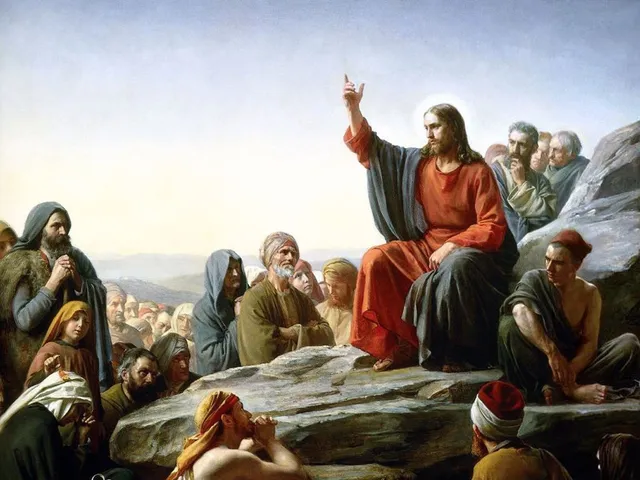
When we picture Jesus upon the hillside, surrounded by a gathering of people from Galilee and beyond, we are witnessing more than a quiet sermon in the open air. The passage known as the Beatitudes (Matthew 5:1-12) opens what is often called the Sermon on the Mount - a cornerstone of Christian spirituality. But this is not simply moral instruction. It is an invitation into a whole new way of perceiving life's struggles, a reorientation of values that subverts the ordinary human pursuit of power and comfort. Here, Jesus blesses those who appear least likely to be blessed, redefining favor, resilience, and divine joy.
May you be blessed with the wisdom to see the sacred in the ordinary - in every conversation, every breath, every sunrise.
These words, ancient and familiar, have shaped the imagination of countless communities through centuries. Yet, they often risk becoming dulled by repetition. To understand the Beatitudes deeply is to let them become strange again - to feel their tension, their tenderness, and their radical promise.
The Texture of the Word "Blessed"
The Greek word "makarios," often translated "blessed," carries a meaning richer than mere happiness. It implies a deep, abiding flourishing that is not dependent on circumstance. It's about alignment with the presence and purposes of God. To be makarios is not to feel lucky but to inhabit divine favor, to find wholeness even in wounds. Jesus begins his sermon not by commanding but by naming who is already seen by God - and this naming has the power to heal.
May you be blessed with peace that steadies your heart when storms gather and things seem uncertain.
May you be blessed with courage to face the shadows within yourself, trusting they too can be transfigured by love.
When we approach these blessings, then, we aren't just reading a list of moral traits. We are stepping into a lived poetic vision - one where God's favor has already touched the marginalized, the meek, and those who hunger for justice. In an anxious world obsessed with self-sufficiency, Jesus quietly says: blessed are those who depend on mercy, who refuse to give up hope, who stay soft in heart.
Poor in Spirit: The Doorway to the Kingdom
"Blessed are the poor in spirit, for theirs is the kingdom of heaven." At first glance, it seems contradictory: poverty as a pathway to wealth. But this isn't material deprivation being glorified; it's an inner humility, a posture of openness. The poor in spirit are those who know their need. They have stopped pretending they can save themselves. This, Jesus says, is where the kingdom begins - in honesty and vulnerability.
In an age where spiritual pride easily sneaks into activism, ministry, or religion itself, Jesus invites us back to spiritual poverty: the willingness to be empty-handed before God. When we recognize our limitations, we make room for grace to flow.
May you be blessed with the humility to accept help when you need it and the generosity to offer it without judgment.
May you be blessed with a sense of purpose even in moments of weakness, knowing your worth is never lost.
This blessing whispers against the noise of competitiveness. It reminds us that the "kingdom of heaven" is not a distant reward but a present reality born in hearts that need, love, and trust. Sometimes the greatest spiritual wealth begins when we learn to live simply and to love openly.
Those Who Mourn: The Alchemy of Grief
"Blessed are those who mourn, for they shall be comforted." Here, Jesus names something tender and raw. Mourning, whether for a lost loved one, a broken world, or the ache of personal failure, is not something to escape. It's a passage - painful, yes, but profoundly human. In naming mourners blessed, Jesus upends the expectation that joy excludes sorrow.
Mourning can transform when it is met with divine compassion. To grieve is to love something enough to feel its absence. And God meets us precisely there - not to erase the pain but to companion it with presence.
May you be blessed with comfort that seeps in like dawn light - gentle, gradual, steady, warming what once felt cold.
May you be blessed with courage to cry unashamedly and still believe the story isn't over.
In community, this comfort often comes through others - a shared meal, a patient friend, a stranger's kindness. The Beatitude invites not isolation but connection. Following the path of Jesus means learning to both give and receive comfort, breathing hope into spaces where despair once lived.
The Meek: Strength in Stillness
"Blessed are the meek, for they shall inherit the earth." Meekness is one of the most misunderstood virtues. It is not weakness, but controlled strength - power directed toward gentleness rather than domination. The meek recognize their strength is not for conquest but for service.
We see meekness embodied in those who act with quiet conviction rather than bravado, who build communities rather than empires. The inheritance promised is not about empire-building; it's about belonging - a restoration of right relationship with the earth and with each other. The world so often rewards aggression, but the kingdom celebrates gentleness as the deeper courage.
May you be blessed with calm strength that neither provokes nor surrenders, but stands firm in compassion.
In a culture of noise, the meek teach the art of silence; in times of conflict, they model patience that disarms the cycle of harm. Their inheritance is the renewal of the earth itself - not through conquest, but care.
Hungering for Righteousness: The Sacred Appetite
"Blessed are those who hunger and thirst for righteousness, for they shall be filled." Hunger is an intensely human experience. Jesus sanctifies it, reimagining spiritual longing not as deficiency but as divine desire. To hunger for righteousness is to yearn for the world to be made whole - for justice, mercy, and truth to flourish.
This hunger is active, not passive. It compels people to build, to heal, to speak against injustice, to feed the hungry and free the oppressed. Such hunger is never comfortable, yet Jesus pronounces it blessed because it mirrors the very heartbeat of God. Those who cannot settle for complacency, who ache for fairness and restoration, are participating in divine work.
May you be blessed with a noble hunger that refuses to falter until love and justice kiss in your community.
May you be blessed with perseverance when the world seems slow to change, and faith that your labor is not in vain.
The filling that Jesus promises is both foretaste and future - a satisfaction found in every act of mercy now, and a final fulfillment when all things are made new.
The Merciful and the Pure in Heart: Two Rivers Converging
Mercy and purity are not traits easily cultivated by effort alone; they are fruits of grace constantly renewed. "Blessed are the merciful, for they shall obtain mercy" and "Blessed are the pure in heart, for they shall see God." These phrases describe two rivers flowing into the same sea - one of compassion, one of clarity.
The merciful understand forgiveness not as weakness but as profound freedom. Their hearts refuse to let bitterness shape their identities. To be merciful is to reflect the divine posture - one that looks upon human failings with eyes of compassion. In such mercy, communities find healing rather than cycles of revenge.
The pure in heart, meanwhile, are those whose intentions are undivided. Purity here is not moral perfection but spiritual wholeness - a heart aligned with love rather than hypocrisy. To see God, as the Beatitude promises, is to perceive grace everywhere, to find the holy in faces and moments we might otherwise overlook.
May you be blessed with mercy that forgives before resentment takes root.
May you be blessed with clarity that cuts through confusion and sees truth in love's patient light.
May you be blessed with joy that overflows when old wounds begin to heal in you and through you.
Both mercy and purity spring from love - the kind that dares to be open-eyed and open-hearted in a fractured world. Together, they guide us toward holiness that embraces rather than excludes.
The Peacemakers: Children of God in the Making
"Blessed are the peacemakers, for they shall be called children of God." This blessing does not idealize passivity. True peacemaking demands courage: the willingness to enter conflict, to bridge divides, to absorb hostility without returning it. Peacemakers don't simply wish for peace; they build it piece by piece.
In communities torn by fear, peacemakers become midwives of reconciliation. They practice listening, empathy, and nonviolent resistance. To be called "children of God" means to bear resemblance to the divine family - to live as mirrors of a holy harmony that transcends enmity.
May you be blessed with patience to keep seeking peace even when mistrust seems insurmountable.
May you be blessed with discernment to know when to speak, when to act, and when to simply be a presence of calm.
Peace, in Jesus' teaching, is not the absence of conflict but the coming of justice. It must be cultivated daily - through listening over shouting, through serving over scoring victories. And every act of sincere reconciliation is a small echo of God's own heart.
Persecution and the Cost of Faith
"Blessed are those who are persecuted for righteousness' sake, for theirs is the kingdom of heaven." This final blessing circles back to the first, completing the arc of promise. Theirs is the same kingdom. The poor in spirit and the persecuted share something: they both live counter to the prevailing order.
Persecution here is not sought but endured - a sign of fidelity, not fanaticism. Jesus reminds his followers that truth and love will sometimes attract opposition. The comfort is not in the suffering itself, but in solidarity with the prophets before them, and with Christ who bore rejection for the sake of redemption.
May you be blessed with steadfast faith that holds even when misunderstood or mocked.
May you be blessed with resilience that draws strength from hope, not approval.
Each age of faith faces its own forms of persecution - sometimes overt, sometimes subtle. Yet the call remains: to live truthfully, compassionately, and courageously, trusting that even in resistance, you stand within divine favor.
Threads of Promise: Living the Beatitudes Today
The Beatitudes weave together a portrait of what it means to be fully alive in the reign of God. They are not moral checkpoints but invitations to transformation. Poverty of spirit teaches dependence, mourning opens compassion, meekness redefines power, hunger for righteousness awakens courage, mercy dissolves vengeance, purity clarifies vision, peacemaking nurtures reconciliation, and persecution seals authenticity.
When these qualities converge, a community begins to resemble the dream Jesus proclaimed. We start to see how "heaven" and "earth" can meet - not in abstract doctrines but in everyday encounters. Indeed, Matthew 5 paints not a static ideal but a living map for discipleship.
May you be blessed with health of body and spirit that allows you to keep walking the path of goodness.
May you be blessed with companionship along the journey - hands that uphold you, hearts that understand you.
May you be blessed with love so expansive that it surprises even you with its resilience.
The promises of these blessings are timeless precisely because they are anchored in the movements of grace we still glimpse in daily life. Every choice for mercy over revenge, every act of quiet kindness, every hunger for justice carries within it the rhythm of the Beatitudes echoing anew. In living them, we become both blessed and a blessing.
The Sound of the Kingdom
As Jesus' words fade into the Galilean air, the hillside becomes silent - yet change has happened. The listeners might not understand it all. Neither do we, fully. But something has begun: a new imagination about what blessing means. These blessings do not promise ease, but they do promise depth - the kind of happiness heaven recognizes.
To hear the Beatitudes today is to hear an invitation beating beneath every challenge: walk gently, trust deeply, act justly, and love boldly. The world is aching for this kind of blessedness - the quiet, luminous kind that does not vanish with circumstance but endures because it is rooted in divine reality. And in that reality, every act of love, every step of mercy, every word of peace becomes an echo of the mountain's promise: "Blessed are you."
May you be blessed with enduring faith, so that even in uncertainty, you know you stand within the kingdom of light.