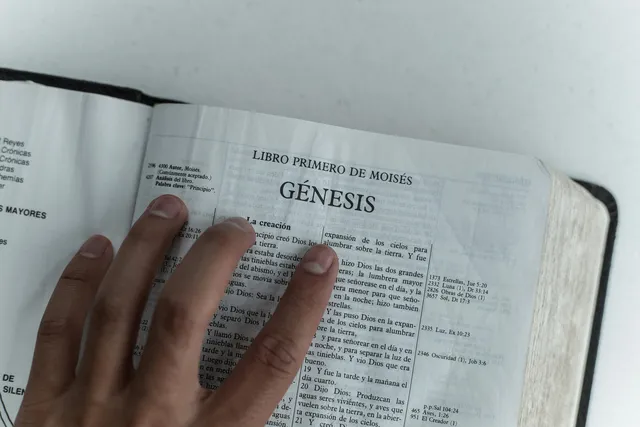
The most catastrophic conversation in human history does not begin with a threat. It begins with a question, asked in a garden, in what sounds almost like idle curiosity: "Did God actually say, 'You shall not eat of any tree in the garden'?" (Genesis 3:1). No armies. No thunder. Just a sentence with a hook in it. Genesis 3 is a short chapter, twenty four verses, and it explains more about your Monday morning than most of the books on your shelf. It tells you why you hide, why work exhausts you, why relationships wound, why you die. And then, before it lets you go, it tells you that God had a plan before the blood on the fig leaves was dry.
The Question That Bends the Truth (3:1)
The chapter opens by introducing the serpent as "more crafty than any other beast of the field that the LORD God had made." Notice that last phrase. The serpent is a creature. Genesis refuses to give evil equal footing with God. Whatever dark intelligence is speaking here (and the rest of Scripture identifies it plainly, calling Satan "that ancient serpent" in Revelation 12:9 and "a liar and the father of lies" in John 8:44), it is not a rival deity. It is something God made, now turned traitor.
The strategy is worth studying because it has not changed in thousands of years. The serpent does not deny God. He does not argue theology. He asks a question that quietly misquotes the command, stretching a generous permission into a stingy prohibition. God had said, "You may surely eat of every tree of the garden," with one exception (Genesis 2:16-17). The serpent's version makes God sound like a warden. The first attack on humanity was not an attack on God's existence but on God's generosity.
The Half-Truth That Kills (3:2-5)
Eve corrects him, mostly. She names the freedom, names the one forbidden tree, and then adds a phrase God never spoke: "neither shall you touch it." A small thing, perhaps, but telling. Under pressure, the command has already begun to feel heavier than it was. Once you experience God's word as a burden, you are halfway to resenting it.
Then comes the flat contradiction: "You will not surely die." And then the sentence that has been whispered to every human being since: "you will be like God, knowing good and evil." What makes it so effective is that it is not entirely false. Their eyes did open. They did come to know good and evil, though not the way they imagined. They learned about evil the way a person learns about fire by putting a hand in it. The serpent sells knowledge and delivers experience.
Underneath the offer is a redefinition of what it means to be human. To be "like God" here means to sit in the seat where good and evil are determined rather than received. It is the ancient trade: swap the freedom of trusting a good Father for the exhausting burden of being your own authority.
The Look, the Reach, the Bite (3:6)
Genesis slows down for one verse and then everything happens at once. "So when the woman saw that the tree was good for food, and that it was a delight to the eyes, and that the tree was to be desired to make one wise, she took of its fruit and ate, and she also gave some to her husband who was with her, and he ate."
Three appetites, all of them good in themselves: hunger, beauty, wisdom. Sin rarely markets itself as ugly. It borrows legitimate desires and points them at a forbidden object. John would later echo this same triad when he warned about "the desires of the flesh and the desires of the eyes and pride of life" (1 John 2:16).
And then those four quiet words: "who was with her." Adam was not away tending a distant field. He was standing there, silent, while the command he had personally received was dismantled in front of him. Paul says the woman was deceived (1 Timothy 2:14), but he lays the weight of humanity's fall on Adam (Romans 5:12), because Adam had the word and did nothing with it. There is a kind of sin that consists entirely of saying nothing.
Fig Leaves and the Birth of Shame (3:7)
"Then the eyes of both were opened, and they knew that they were naked." The chapter before had ended with them naked and unashamed (Genesis 2:25). Nothing about their bodies changed in the space of a single verse. What changed was that they now had something to hide, and once you have something to hide you begin to suspect that you yourself are the thing that needs hiding.
So they sew fig leaves together. It is the first act of religion in the Bible, and it is entirely human: a homemade covering, thin, temporary, made of whatever was within reach. Every attempt to manage our own guilt since then has followed the same pattern. We construct respectability, achievement, busyness, comparison, and hope the seams hold. They rarely do.
"Where Are You?" (3:8-13)
God comes walking in the garden "in the cool of the day," a phrase that suggests this was normal, expected, the ordinary evening rhythm of a relationship. And for the first time, the sound of God approaching produces terror instead of joy. They hide among the trees, which tells you how far reason has already fallen; you cannot hide from the One who made the trees.
Then God asks a question, and it is not the question of an investigator who has lost the trail. "Where are you?" is the first question in the Bible, and it is asked by a God who is seeking. He could have arrived with a verdict. Instead He arrives with an invitation to speak. God's first move toward fallen humanity was to come looking.
The answers are heartbreaking in their evasiveness. Adam says, "The woman whom you gave to be with me, she gave me fruit of the tree, and I ate." Two accusations in one sentence: the woman did it, and You gave her to me. Eve says, "The serpent deceived me, and I ate." Both of them tell the truth in a way designed to avoid it. Notice, though, that each confession ends with the same two words: "and I ate." Even blame cannot quite delete the verb.
The Curse on the Serpent (3:14)
God does not interrogate the serpent. He sentences it. The curse of crawling on the belly and eating dust is language of utter defeat and humiliation, the posture of a conquered enemy in the ancient world. Whatever else Genesis is doing here, it is announcing that the tempter's future is degradation, not triumph.
The First Promise (3:15)
And then, in the middle of a courtroom scene, God says something no one asked for: "I will put enmity between you and the woman, and between your offspring and her offspring; he shall bruise your head, and you shall bruise his heel."
Christians have called this verse the protoevangelium, the first gospel, and the name fits. Before a single curse falls on the man or the woman, God announces that the story will not end with the serpent winning. There will be war, generation after generation, and out of the woman's line will come one who takes a wound to the heel and delivers a wound to the head. One injury is survivable. The other is fatal.
Read the rest of Scripture and you can watch the promise travel. It narrows to Abraham, to Judah, to David, and finally to a specific announcement that God "sent forth his Son, born of woman" (Galatians 4:4). The heel wound is a cross. The head wound is an empty tomb. Paul is clearly thinking of Genesis 3:15 when he tells the Romans, "The God of peace will soon crush Satan under your feet" (Romans 16:20), which means the promise is not only about Christ but about everyone joined to Him.
Hope spoken before the sentence
The placement matters as much as the content. God announces rescue before He announces the consequences. Adam and Eve heard about pain in childbirth and thorns in the field only after they had heard that a child would come who breaks the serpent's skull. Grace is not God's response to our repentance; it is what makes repentance possible.
Pain in the Places of Blessing (3:16-19)
The consequences that follow are precise. They fall on the two great vocations God gave humanity in Genesis 1: be fruitful and multiply, and work the ground. Sin does not invent new areas of life. It poisons the good ones.
To the woman: "I will surely multiply your pain in childbearing." The place of the deepest human joy becomes the place of severe cost. Then a harder line: "Your desire shall be contrary to your husband, and he shall rule over you." Christians read this in different ways. Some hear a longing for the husband that will not be met, others a desire to control that meets domination in return, the same grammar Genesis uses of sin crouching at Cain's door in 4:7. What is not debatable is the tone. This is diagnosis, not blueprint. Marriage after Eden will be marked by a struggle for the upper hand, and the New Testament calls husbands and wives out of that struggle and into mutual love and self-giving (Ephesians 5:21-33).
To the man: "Cursed is the ground because of you." Not the man himself, notice, but the ground under his feet. Work becomes a wrestling match with a world that resists. "Thorns and thistles it shall bring forth for you." Anyone who has poured years into a project that yielded a fraction of what it should have knows this verse in their body. And then the last word, the one that hangs over every human life: "you are dust, and to dust you shall return." The serpent said they would not die. They did.
Eve, Mother of All Living (3:20)
What Adam does next is startling. Standing in the wreckage, having just been told he will return to dust, he names his wife Eve, "because she was the mother of all living." He heard the promise. Somewhere in the sentence about the offspring who crushes the serpent, faith took hold. He names her not for the death they have earned but for the life that is coming. It is the first act of hope in a fallen world, and it happens roughly ninety seconds after the worst news ever delivered.
Garments of Skin (3:21)
"And the LORD God made for Adam and for his wife garments of skins and clothed them." Ten words that carry enormous weight. God does not comment on the fig leaves. He replaces them.
Something died for this. Genesis does not draw the line explicitly, and it would be reaching to call this a sacrifice in the full Levitical sense, but the pattern is unmistakable to anyone who reads forward: the covering of human shame costs a life. Later Israel would learn that "without the shedding of blood there is no forgiveness of sins" (Hebrews 9:22). Later still, Paul would tell believers they have "put on Christ" (Galatians 3:27).
Picture it for a moment. The God whose command they broke kneels down and dresses them, the way a parent dresses a child. Judgment and tenderness are not competing sides of God's character; here they arrive in the same breath.
The Mercy of the Flaming Sword (3:22-24)
The chapter ends with exile. God drives them out "lest he reach out his hand and take also of the tree of life and eat, and live forever." At first this reads as pure severity. Look closer and it is protection. To eat from the tree of life in this condition would be to freeze humanity permanently in its ruined state, deathless and unredeemed. Death, terrible as it is, becomes a boundary on how long a broken world can last.
Cherubim and a flaming sword guard the way east of Eden. The door is shut, but the last word of Scripture reopens it. In Revelation 22, the tree of life stands in the middle of the city, its leaves "for the healing of the nations," and there is no longer any curse. The Bible begins with a garden closed and ends with a garden city thrown open.
Living East of Eden
Genesis 3 is not primarily a chapter about how bad we are, though it is honest about that. It is a chapter about a God who comes walking in the cool of the day even when He knows what He will find. The pattern set here runs through the whole of Scripture and through most Christian lives: we hide, He seeks, we blame, He promises, and then He covers what we could never cover ourselves.
Which means the most practical thing this chapter asks of you is to stop sewing. Whatever fig leaves you have stitched together this year, the performance, the deflection, the careful editing of what people are allowed to see, they were never going to hold. There is a covering already made, at cost, offered by hands that were themselves wounded in the heel. Step out from behind the tree and answer the question. He is not asking because He does not know. He is asking because He wants you back.