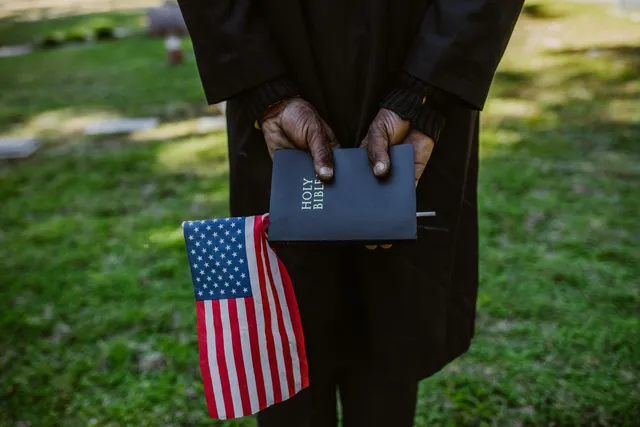
It's one of those phrases that slips easily off Christian tongues but reveals deeper truths when we linger over its meaning: being "in the world but not of it." It sounds simple-almost poetic-but what does it truly look like when lived out day by day? It's a phrase rich with both tension and beauty, and understanding it may be one of the most important journeys of the life of faith.
Jesus' Words that Shaped the Phrase
The phrase itself echoes the words of Jesus in His prayer recorded in John 17. As He prepared to go to the cross, Jesus prayed not only for His disciples but for all who would believe through them. He said, "They are not of the world, even as I am not of it" (John 17:16). But just before that, He added, "My prayer is not that You take them out of the world but that You protect them from the evil one" (John 17:15).
There it is-the heart of the matter. Jesus didn't call His followers to escape the world, but to engage it differently. He sent us into its cities, workplaces, neighborhoods, and nations not to blend in or to judge from the sidelines, but to live distinctively-to bring heaven's light into earth's shadows.
The Balance We Often Miss
Christians across generations have wrestled with the balance between separation and engagement. Some traditions veer toward withdrawal, building walls to keep the world's influence out. Others lean the opposite way, bending so far toward relevance that distinctiveness fades. Yet the call of Jesus resists both extremes.
To be in the world means to live with our feet planted firmly in the realities of daily life-raising children, paying bills, creating art, serving our communities. But not of the world means our allegiance, our identity, and our hope are rooted elsewhere. We belong to another Kingdom, with another King.
Jesus didn't isolate Himself from sinners-He ate with them, touched them, healed them. Yet neither did He ever become like them in their brokenness. He loved fully without compromise. That narrow road is the one we're invited to walk.
Living Between Two Realities
This tension-this "between-ness"-isn't meant to frustrate us; it's meant to form us. We live as citizens of heaven while inhabiting the soil of earth (Philippians 3:20). The pull of both realities is constant. The spiritual tug of home calls us upward, yet the ministry of love keeps us grounded here among neighbors who also need grace.
Every Christian life is a bridge-anchored in eternity, stretched across time. And bridges are meant to be walked upon, connecting two worlds that would otherwise never meet.
The Wilderness of Influence
Think of Daniel in Babylon. Torn from his homeland, surrounded by pagan culture, and educated in the ways of a foreign empire, Daniel was fully "in" that world. Yet "of" it? Never. His heart was still tuned to God. When he refused the king's food, he wasn't protesting cuisine; he was guarding covenant identity. The world around him couldn't dictate who he was.
Each generation of believers faces its own version of Babylon-a place where loyalty to God is tested in subtle ways. The workplace that prizes ambition at any cost, the social media world that measures worth by visibility, the academic climate that treats faith as foolishness-all these are modern Babylons. Being in the world but not of it means learning courage without hostility, faithfulness without fear.
How We Carry Ourselves Matters
Paul once described the followers of Jesus as "the aroma of Christ" (2 Corinthians 2:15). That phrasing suggests something powerful. You can't see a scent, but you can't ignore it either. It fills a space quietly but unmistakably. We don't dominate the world; we permeate it. Our kindness, integrity, humility, and compassion create the fragrance of another world.
Faithfulness is fragrant. The more we walk with Christ, the more that aroma clings to our attitudes, our conversations, our choices. That's what it means to live in the world in a way that changes it from within.
When the World Presses Back
Of course, the moment we live differently, the tension intensifies. When Jesus said we are not of this world, He acknowledged that rejection might follow. "If the world hates you, keep in mind that it hated Me first" (John 15:18). But remember-being "not of the world" isn't permission to be harsh or self-righteous. It is an invitation to reflect Christ even under pressure.
Resistance reveals authenticity. It's easy to blend in, to mute our values and slide beneath the current. It's easy, but it's hollow. When we choose to honor Christ even when it costs something-when we refuse gossip, or integrity overrides convenience-we display a hope that cannot be manufactured by culture. People notice that kind of peace.
The Subtle War of the Heart
Being "in but not of" is less about a physical location and more about the orientation of the heart. The world Jesus referred to was not just geography-it was the system of values opposed to God's. Pride, greed, self-centeredness-these are the gravitational pulls that would draw the believer off course.
Guarding the Inner Allegiance
Jesus didn't withdraw from people, but He did protect His intimacy. He slipped away often to commune with His Father. That rhythm-engagement and withdrawal, connection and solitude-kept His compass true. In the same way, we must cultivate time in God's presence so the world doesn't define us before the Word does.
When the soul stays tethered to Christ through prayer, worship, and Scripture, the noise of the world loses its power to confuse. We no longer need to measure success by society's definitions. Our heart begins to beat to a different rhythm-one shaped by eternal purpose, not temporary applause.
Becoming Light in a Dim World
Jesus called His followers "the light of the world" (Matthew 5:14). Notice again-He didn't tell them to retreat into safe spaces, but to shine right where darkness seems strongest. Light doesn't curse darkness; it simply shines. That's what being in the world but not of it looks like on the ground-living your faith so fully, so tenderly, that even ordinary acts become evangelism.
The way you treat a difficult colleague, the patience you show when plans unravel, the peace you carry when everyone else panics-these moments preach louder than sermons. A heart anchored in heaven brings quiet revolution to earth.
When Ordinary Faith Becomes Extraordinary Influence
Think again of Daniel, Joseph in Egypt, Esther in Persia, Lydia in Philippi-ordinary believers placed in extraordinary cultural contexts. None of them preached from pulpits; all of them changed history through faith that flowed naturally into their surroundings. They didn't escape the world, nor did they mirror it-they transformed it from within.
It's tempting to think that our ordinary lives can't carry that kind of impact. But Christ's Kingdom grows through seeds, not spectacles. Every small act of faith resists the spirit of the world. Every choice to forgive rather than retaliate, to serve rather than grasp, to love rather than withdraw-that's what it means to live "in but not of."
The Danger of False Separateness
Sometimes Christians misunderstand being "not of the world" as permission to distance themselves entirely-to build comfortable enclaves where everyone looks, thinks, and behaves the same. But that is not holiness; that's self-protection. Jesus didn't pray for His followers to be taken out of the world-He prayed for their strength within it. Holiness isn't absence; it's presence with purpose.
Carrying Heaven's Signature
Every believer carries a divine imprint. The Spirit of God within us means we are walking sanctuaries of grace. That's a staggering thought: wherever we go, the presence of God goes. The question is not whether we influence the world, but how. Does our presence soothe or stir? Does it reveal Christ or conceal Him beneath fear or compromise?
The early church didn't change the Roman Empire through power or politics. They did it through presence-by serving the poor, rescuing abandoned infants, welcoming strangers, and forgiving persecutors. They lived within the world's empire but not under its rule. That same quiet courage is what the Spirit forms in us today.
Learning the Rhythm of Heaven
To live in the world but not of it means learning a rhythm-a daily recalibration between action and reflection, mission and intimacy. It's the way of the pilgrim heart: eyes lifted toward the eternal even as hands labor faithfully in the temporal.
We don't need to fear the world, because Christ has overcome it (John 16:33). Nor do we need to despise it, because God so loved it that He sent His Son. We are sent into it with that same love, carrying redemption in every step. Being "in the world but not of it" is not escape-it's incarnation.
Walking Out the Call
So how do we walk this out? Begin where you are. Ask often: "Where am I tempted to blend when I'm called to shine? Where have I withdrawn when I'm meant to engage?" Then listen for the Spirit's guidance. He may lead you to speak kindly where criticism reigns, to serve quietly where selfishness rules, to remain honest where deception feels easier.
Each act of faith refines our identity as heaven's ambassadors. Each decision to love in a loveless world reminds us that grace still has power. And as you live with that awareness, you begin to understand what Jesus prayed for His people-the mysterious, glorious calling to be rooted and radiant at the same time.
Heaven's People on Earth's Soil
To be "in the world but not of it" isn't a slogan-it's the description of a transformed heart. It means we engage deeply but belong elsewhere. We live fully present yet quietly homesick for Christ's kingdom. We love people fiercely but refuse to worship what they worship. We walk through this earth carrying heaven's hope in clay jars.
This is the Christian paradox: We live among those who may not understand us, yet we live for the One who does. We work, laugh, create, weep, and hope here, all while knowing something greater is coming. Every sunrise and every act of grace reminds us that we are tethered to a greater reality than what our eyes can see.
So go ahead-step into the noise, the beauty, the brokenness of the world. Love it enough to serve it, and revere God enough not to lose yourself in it. That is the secret joy of following Jesus: to walk through this world, leaving traces of another one behind.