When the World Splinters
It seems that nearly every headline, conversation, and online thread today begins with division: political, racial, generational, or spiritual. We are becoming experts at labeling each other, drawing lines around identity, and retreating into safe echo chambers. And yet, the human heart still aches for belonging, for a place to be known and loved despite our differences. This is precisely where the Church is called to shine-not as another ideological tribe, but as a living testimony to the reconciling power of Christ.
When Jesus prayed that His followers would be one, "so that the world may believe that You have sent Me" (John 17:21), He was not offering a poetic flourish at the end of His ministry. He was describing the very heart of the Gospel's witness. In a fractured world, unity reveals Christ.
The Church as a Living Bridge
What does it mean to be the bridge where others build walls? Historically, the early Church modeled this countercultural unity. Jews and Gentiles broke bread at the same table, slaves and free people served side by side, women were treated as co-heirs of grace. These were not minor social gestures-they were radical acts of defiance against division. Every shared meal was a declaration that the kingdom of God was not segregated by status or ethnicity.
The Church today stands at a similar crossroads. The temptation is to allow the world's divisions to infiltrate our pews, turning spiritual family into partisan factions. Yet when the Body of Christ operates as one, tenderly bearing one another's burdens (Galatians 6:2), it becomes a mirror reflecting God's reconciling heart. This unity does not erase difference; instead, it celebrates diversity under the banner of divine love.
Seeing Each Other Through Christ's Eyes
To act as a bridge requires a transformed vision. We cannot love what we do not see, and we rarely see others clearly unless we look through the lens of grace. The apostle Paul reminds us, "From now on we regard no one according to the flesh" (2 Corinthians 5:16). To see others in Christ is to break the spell of suspicion and judgment that so easily divides us.
Every act of listening, every prayer for someone across the aisle, every shared meal of reconciliation is a small but sacred step toward healing the world's fractures. The Church's witness begins not with public statements, but with transformed relationships.
Truth and Grace in Equal Measure
There is a danger in speaking of unity that it becomes sentimental-something that glosses over truth or minimizes justice. But genuine unity never demands silence in the face of evil. Instead, it calls for a deeper courage: the courage to speak truth in love.
Jesus, the embodiment of perfect love, was also the clearest voice of truth. He overturned tables, yet He also knelt to wash feet. He exposed hypocrisy, yet He restored the broken-hearted. To follow Him means holding both truth and grace in tension. When truth is spoken without love, it hardens hearts. When love is shown without truth, it offers shallow comfort. But when both meet, healing becomes possible.
Discipleship That Listens and Learns
The Church's role in a divided society is not to always have the loudest opinion, but to cultivate humble hearts that listen first to God and then to others. Disciples are learners, not lecturers. When Christians model curiosity rather than combativeness, the world sees something refreshingly different. Listening itself can become a ministry of reconciliation.
Imagine a Church that does not merely debate issues but loves people through them. A Church that listens deeply to stories of pain and offers both truth and compassion in response. That is the Church the world longs to encounter.
Hospitality in the Age of Isolation
Division thrives in distance. The farther apart we drift, the easier it becomes to caricature each other. But hospitality disrupts that distance. When we open our homes, tables, and hearts, we defy the narrative of suspicion and fear. We declare, in the language of ordinary grace, that every person bears the image of God.
In Scripture, hospitality was never about entertaining guests to showcase perfection-it was an act of spiritual warfare against loneliness and alienation. Abraham welcomed strangers who turned out to be angels (Genesis 18). Jesus dined with tax collectors and sinners, turning scandal into salvation. The early believers broke bread from house to house (Acts 2:46), blurring every line the world drew between insiders and outsiders.
Today, a meal shared can still be holy ground. When we invite someone who disagrees with us to sit at our table, we create space for the Holy Spirit to work. Such moments rarely go viral, but they quietly change hearts. This kind of grounded, embodied love is how the Church heals division-one conversation at a time.
The Church as a Sanctuary of Hope
In seasons of societal fracture, many hearts grow weary. Despair becomes easy; cynicism feels safe. But the Church is not meant to mirror the world's gloom-it is called to be a sanctuary of hope. Hope is not naïve optimism; it is the defiant belief that God is still writing redemption into every human story.
The Cross as the Center of Reconciliation
At the center of our faith stands the cross-a place of both suffering and triumph. There, every barrier is dismantled. Paul proclaims that Christ "has broken down the dividing wall of hostility" (Ephesians 2:14). The cross turns enemies into family, strangers into siblings. It reminds the Church that genuine reconciliation is not cheap; it costs something. To carry the cross is to lay down our pride, preferences, and prejudices.
The cross calls us back to the table of humility and forgiveness. Without forgiveness, the Church cannot be salt and light in a bitter world. But when forgiveness takes root, the light of Christ pierces even the darkest division.
Renewing the Church's Voice
For the Church to fulfill her reconciling mission, she must rediscover her voice-not as an echo of culture, but as the echo of Christ. This voice will sound less like shouting from a platform and more like the whisper of presence in pain, justice lived out in community, and love that outlasts disagreement.
The Church must also examine her own divisions. Denominational walls, theological rivalries, and generational conflicts have sometimes diluted the witness of unity. Renewal begins when believers repent not only for the world's sin, but for their own. A repentant Church becomes a radiant Church. When humility replaces pride, the Gospel regains its integrity in the eyes of the watching world.
Worship That Unites
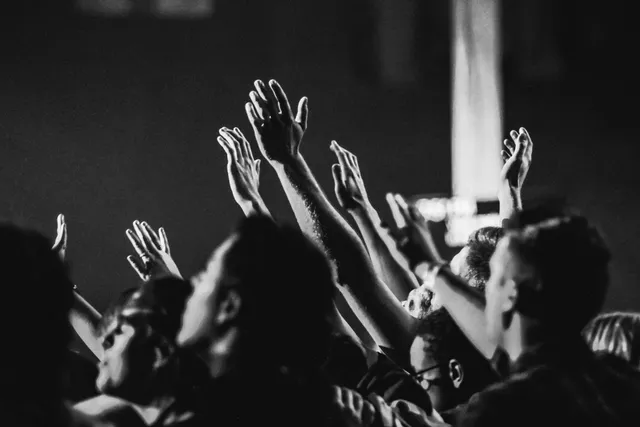
In worship, the Church rehearses unity. Every voice lifted together toward heaven transcends earthly categories. No matter the melody, language, or style, what binds worshipers is their shared need for grace. When we lift our eyes together, we are reminded that we belong-not because we agree on everything, but because we are loved perfectly by the same Savior.
Living the Message Every Day
How do we live this calling when we walk outside the sanctuary and back into a divided world? It begins with small faithfulness. Choose to speak kindly in a conversation that invites contempt. Offer a prayer for a leader you disagree with. Resist the urge to categorize before you connect. Serve where reconciliation is needed most-in your family, workplace, neighborhood.
This daily discipleship of unity may not make headlines, but it transforms hearts. The Spirit of Christ delights in humble, peacemaking hearts that sow seeds of reconciliation wherever they go.
One Light in Many Lamps
The Church's role in a divided society is not to win every argument or fix every system by its own strength. It is to shine as a faithful witness to another kingdom. The Church becomes the embodied message that love is stronger than hate, grace deeper than offense, peace louder than fear.
Imagine it: believers gathering across differences, praying with those they once labeled as opponents, raising children who see reconciliation not as weakness but as courage. This is not a dream too lofty to touch-it is the quiet revolution Jesus started when He called us His Body.
The world may continue to splinter, but the Church can choose another way. Let us become that light: many lamps, one flame, illuminating the love of Christ to a watching world.