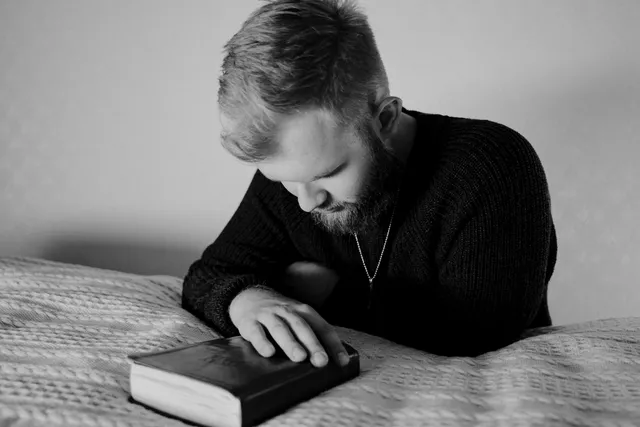
There's a quiet ache that lives beneath the lives of many believers - the feeling that we should always be doing more. More serving, more giving, more production, more visible fruit. It's noble, perhaps even holy-sounding, but it can leave the heart weary and afraid to rest. Yet, the invitation to rest was never the world's idea; it was God's. The One who neither slumbers nor sleeps still calls us to lay down what burdens us, to breathe deeply in His grace, and to trust that His love does not depend on our constant motion.
The Sacred Paradox of Rest
Rest in God is both a command and a gift - a paradox that feels almost contradictory. In Genesis, God Himself rested after creation, not because He was tired, but to bless and sanctify a rhythm for His people. By resting, He set a holy example that wholeness doesn't come from endless striving but from abiding in sufficiency. To rest is to trust that God is enough, even when we don't "produce" anything in return.
But guilt so often creeps in. We think, "Shouldn't I be helping more? Praying longer? Saying yes to another need?" That subtle pressure disguises itself as devotion but often springs from fear - the fear of being less, of disappointing God, or falling short of expectations. Yet, God's rest doesn't diminish our love or service; it purifies their source. It teaches us that true fruitfulness flows from being rooted in Him, not from frantic activity.
When Guilt Masquerades as Godliness
Many of us confuse rest with laziness or self-indulgence. It's as if we secretly believe our worth depends on productivity - even spiritual productivity. We feel we must earn the right to slow down. But the gospel says otherwise. Jesus' invitation was not, "Come to Me, all you who have worked hard enough," but rather, "Come to Me, all you who are weary and burdened, and I will give you rest" (Matthew 11:28).
Learning to Recognize False Guilt
There is a difference between conviction and condemnation. Conviction is the Spirit's gentle nudge toward life-giving change; condemnation is the cold whisper that says, "You are not enough." The first draws us toward God; the second drives us from Him. When rest feels wrong, we must ask: whose voice am I listening to?
False guilt thrives in comparison. We see others doing more and assume that stillness equals irresponsibility. But remember Mary and Martha in Luke 10. Martha busied herself in service for Jesus, while Mary simply sat at His feet. Jesus didn't scold Martha for serving; He invited her to reorder her heart. "Mary has chosen what is better," He said. That "better" wasn't inactivity - it was intimacy.
Rest as an Act of Faith
Choosing to rest is a declaration of trust. It's saying, "God, I believe You can hold the world - and my responsibilities - even when I stop." In a culture obsessed with hustle, Sabbath rest becomes a theological statement: God is the sustainer, not us.
In the Old Testament, God commanded His people to rest one day each week. It wasn't arbitrary; it was formational. Every Sabbath, Israel paused to remember that their survival and success didn't depend on their ability to plow, cook, or trade. Their dependency was on His provision. In the same way, when we stop, even briefly, we proclaim God's sovereignty over our schedules, our work, our identity.
The Trust Factor
Trusting God through rest is, paradoxically, a form of spiritual discipline. It often requires more faith to stop than to keep going. Rest reminds us that we are creatures, not creators of our own worth. The world turns even as we sleep - proof that God remains in charge.
The Rest That Restores
Rest isn't only physical; it's emotional, spiritual, and relational. Sometimes what we need most isn't a nap, but a moment of stillness in God's presence. Psalms 46:10 whispers, "Be still, and know that I am God." That knowing - intimate, experiential, heart-deep - often blooms only in quiet soil.
This kind of rest looks different for everyone. For some, it's lingering in Scripture without an agenda. For others, it's a walk without earbuds, just noticing creation's silent worship. It might mean stepping away from ministry for a season or saying no to good things so that better things (like health, peace, or prayer) can be reclaimed. The key isn't the form but the focus - resting in the presence and sufficiency of God Himself.
Jesus, Our Perfect Example
Even Jesus, the Son of God, took time away from crowds to pray, reflect, and breathe. The Gospels are full of small, telling moments: He withdrew to solitary places, He slept on boats, He lingered with friends. If the Savior of the world made space for sacred rest, how could we imagine that doing so is weakness?
Jesus' rhythm of ministry flowed from rest, not into it. He didn't wait to burn out before retreating to the Father. His power came from abiding. His clarity came from communion. This rhythm protected Him from being defined by need or approval. It kept Him aligned with His mission, not the demands of the moment. In our hurried world, rediscovering that same rhythm revives both our sanity and our souls.
How to Rest in God Practically
So how can we rest in God without guilt? How do we translate this truth from concept to reality, especially when responsibilities feel endless? Let's explore some practical steps that lead us toward grace-filled rest.
1. Redefine Productivity
In the kingdom of God, rest is productive. It renews perspective, heals exhaustion, and clears the clutter of the heart. Begin by untangling your worth from your work. Remind yourself that your identity is not in doing, but in being - being loved, being chosen, being His.
2. Create Rhythms of Renewal
You might not be able to take a full Sabbath every week, but you can weave rest into your daily rhythm. A few minutes of surrender in the morning, a walk at dusk, time to reflect before bed - these quiet spaces act as small Sabbaths. Over time, they train your heart to rest even amid busyness.
3. Silence the Inner Critic
When guilt surfaces, talk back to it with truth. Say, "God is not glorified by my burnout. He delights in my peace." Rest isn't selfish; it's stewardship. To rest well is to care for the body and soul God entrusted to you.
4. Learn to Say No
Every no makes room for a deeper yes. Busyness is not the same as faithfulness. Sometimes the most spiritual decision is to decline one more task so that you can be present - to God, to loved ones, to yourself. Jesus said no to crowds sometimes, not out of neglect, but out of obedience to the Father's timing.
5. Rest in the Finished Work of Christ
Ultimately, our deepest rest comes from this truth: it is finished. You don't have to earn what's already been given. You can breathe freely because grace has already done the heavy lifting. The cross removed the pressure to prove your worth. The resurrection revealed that life with God begins not with striving, but with surrender.
Letting Go of the Fear of Falling Behind
Often, guilt hides a deeper fear: that others will surpass us, forget us, or judge us if we slow down. But the kingdom of God doesn't operate by competition. It moves at the pace of love. When we learn to anchor in God's timing, we no longer measure progress by busyness but by obedience.
Even the seasons whisper this truth. Trees bear fruit for a time and rest for a time. Both are holy. Both are necessary. In the same way, God uses seasons of stillness to prepare the ground for new growth. The hidden parts of our story - the pauses, the quiet, the in-between - are often where His deepest work is done.
When Rest Feels Like Resistance
Choosing rest in a world that glorifies hustle is an act of countercultural faith. It pushes back against the lie that our value is measured by output. It reminds us that our primary calling is to abide, not perform. The early church understood this; they prayed and fasted, but they also gathered to eat, sing, and rejoice. Their rest was part of their witness - a visible sign of trust in a God who reigned even as they slept.
Perhaps one of the most powerful testimonies today is a believer who can work diligently yet lay it all down at day's end, whispering, "It is enough for today, Lord. You are enough."
Resting Without Guilt - A New Way Forward
To rest in God without guilt is to live as if grace is true, not just preached. It is to turn our rest into worship - not the worship of comfort, but of confidence in a faithful God. We rest because He reigns. We stop because He never does. We breathe because His presence makes room for our peace.
So take the nap. Step outside. Light the candle. Put away the phone. Sit quietly with your Bible open, not to study, but just to listen. Whisper, "You have my permission, Lord, to carry what I cannot." That simple yielding is more powerful than you know.
Rest is not rebellion against responsibility - it's participation in redemption. It's the manifestation of trust that we belong to a God who created good rhythms, who modeled holy stillness, and who invites us again and again to stop striving and simply be loved.
Let your rest preach what your words cannot: that God is enough, and so are you, in Him.