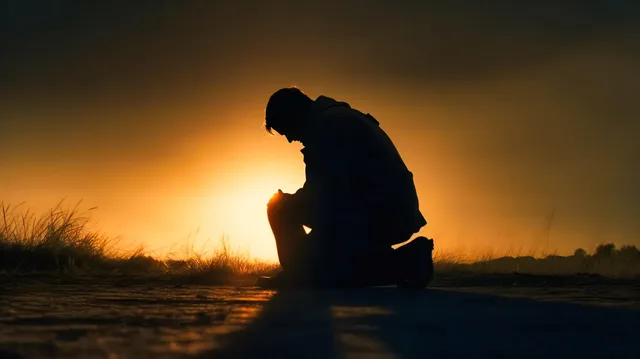
When life suddenly veers off the map - when the news is bad, the diagnosis is unexpected, or the loss is unbearable - the question rises quietly in the depths of the heart: How do I keep believing? For Christians, faith is both an anchor and a mystery in times of crisis. It is not about pretending everything is fine, but about trusting the One who remains faithful when nothing else holds steady. The road of faith in crisis is not straight, but it is sacred.
Faith Under Fire: What It Feels Like When Life Hurts
Every believer faces seasons that test faith's foundations. Even the heroes of Scripture - those we think of as steadfast - had trembling hearts. Elijah, after witnessing fire fall from heaven, fled into the wilderness in despair, saying, "I have had enough, Lord." David wept until he had no strength left (1 Samuel 30:4). Job, stripped of everything, sat in ashes asking why. Their stories remind us that faith does not mean being unshakable; it means bringing our shaking to God.
During crisis, faith can feel less like a flame and more like embers hidden under ash. Yet those embers are real - and they still burn. Faith in crisis begins not with triumph, but with honesty. It starts when we stop pretending before God and come to Him as we are: afraid, wounded, and uncertain.
Turning Toward God Instead of Away
The first temptation in hardship is often to retreat - to isolate, to disengage from prayer, to let bitterness or fatigue drown hope. Yet the strange paradox of faith is that the very moments when God feels most distant are often the times we most need to speak to Him. Prayer may not sound eloquent during crisis. Sometimes it's little more than a sigh or a few unsteady words. But heaven hears the raw cry of the heart.
The Power of Honest Prayer
Jesus Himself prayed with tears in Gethsemane. He did not hide His sorrow; He laid it bare before the Father. That honesty is not weakness - it is intimacy. Prayer during crisis is not about saying the right thing but about staying close enough to God to keep talking. Psalms 62:8 gives an invitation and a command: "Pour out your hearts to Him, for God is our refuge." That's not polite language. It's vigorous, painful honesty - but it is also where restoration begins.
The Ministry of Remembering
When fear threatens faith, remembering is often the first spiritual defense. Throughout Scripture, God's people are told: Remember what the Lord has done. Memory becomes an altar where faith can rest. In the desert, Israel constantly faltered in belief, yet God reminded them again and again of how He had delivered them from Egypt. The psalmists cry, "I will remember the deeds of the LORD" (Psalms 77:11) - not out of nostalgia, but as a weapon against despair.
To remember is to resist amnesia of the heart. It is choosing to look back at faithfulness in the past to gather courage for the present. In personal crisis, this might mean journaling the ways God has provided before, recounting small miracles, or reading again the passages that once breathed life into weary days. The act of remembering pulls the heart from panic to perspective.
Finding Strength Through Community
Faith, though deeply personal, was never meant to be private. In times of crisis, isolation magnifies despair. One of the ways Christians sustain faith is through the body of Christ itself - through companionship, prayer, and presence. Romans 12:15 calls believers to "mourn with those who mourn." It's not about fixing someone's pain but about sharing it. Just as Aaron and Hur held up Moses' arms when he grew weary, we need brothers and sisters who hold us when our faith wavers.
Carrying One Another's Faith
Sometimes we are the ones who believe for others; sometimes they believe for us. In the Gospels, a group of friends carried a paralyzed man to Jesus by lowering him through a roof. The text says, "When Jesus saw their faith..." (Mark 2:5). Community can literally carry faith when ours feels too heavy. In the spiritual family, hope multiplies through companionship. Each shared prayer, each word spoken in faith, becomes a hand reaching out of the dark.
Anchored by the Promises
During crisis, facts shout loudly: you're out of options, everything is collapsing, there's no way forward. Promises, by contrast, whisper. But those whispers are eternal. Scripture is filled with promises that were written for stormy seasons: God's nearness (Psalms 34:18), His sufficiency (2 Corinthians 12:9), His peace that surpasses understanding (Philippians 4:7). Promises don't remove the pain, but they reinterpret it.
To hold onto promise is to grip a rope tied to eternity. It is choosing to let God's words define reality more than the crisis does. In a world that measures worth by outcomes, promises remind believers that God measures by surrender and faithfulness.
Examples From Scripture's Storms
Biblical faith was repeatedly shaped through crisis. Noah trusted God while the sky was clear and people mocked him. Abraham left home not knowing where he was going. Ruth followed Naomi into an uncertain land with simple loyalty. Mary believed God's impossible plan when she could have been shamed for it. And Paul, writing from prison, could still say, "We are hard pressed on every side, but not crushed."
Crisis does not cancel calling - it refines it. It exposes what was superficial and strengthens what is real. In each of these stories, the heart of faith was not success, but surrender. The act of keeping faith did not mean controlling the outcome; it meant clinging to God in the unknown.
The Example of Job
Few figures embody faith in suffering like Job. When everything he cherished was stripped away, his friends gave him theology but no comfort. Job's journey is not tidy; he questions, protests, and grieves. Yet his steady refrain, "Though He slay me, yet will I trust Him" (Job 13:15), remains one of Scripture's most startling declarations. His faith survived not because he understood, but because he refused to let go of relationship. Faith during crisis is not intellectual endurance but relational fidelity.
Sacred Waiting
There is a kind of waiting known only to those who have suffered: the waiting for an answer, for healing, for breakthrough. Waiting tests patience, but for the believer, it also deepens trust. Isaiah 40:31 promises that "those who wait on the Lord will renew their strength." Waiters are not idle; they are watchful. They hold their hearts steady in expectation that God will act, even if His timing baffles human reason.
Waiting becomes an altar of trust. It may feel powerless, but heaven sees it as worship. When we continue to hope, even when nothing around us shifts, we join generations of saints who learned to trust the unseen hand of God more than their circumstances.
Practices That Sustain Faith Daily
Keeping faith during crisis is not a single decision; it is a daily discipline. It involves what we feed our hearts with every morning and every night.
Immersing in the Word
God's Word is not merely inspirational - it is oxygen. In the wilderness, Jesus countered temptation not with emotion but with Scripture. Reading and meditating on the Word during crisis reorients the soul to truth. Some believers find it helpful to write verses on cards or place them in visible places, bringing God's promises back before weary eyes.
Choosing Gratitude
Gratitude in crisis sounds almost unreasonable, yet it is one of the most potent spiritual weapons. To say "thank You" when life is hard is to declare that God's goodness still defines reality. Paul and Silas sang hymns in prison (Acts 16), not because they were optimistic, but because their praise asserted that God was still Lord even behind bars.
Serving Amid Suffering
Service turns pain outward into love. When believers choose to bless others even from their own brokenness, they reflect Christ Himself, who gave hope while carrying a cross. Sometimes the surest way to recover hope is to give it away.
When Faith Falters
There will be moments when prayer feels empty, when worship feels forced, and when the heart whispers, "I can't do this anymore." These are not failures of faith - they are part of faith's formation. Thomas doubted, Peter denied, yet the risen Christ restored them both. God's faithfulness does not depend on the perfect constancy of ours.
When faith falters, we can fall backward into grace. The Shepherd does not abandon struggling sheep; He goes out to find them. One of the most comforting truths in crisis is that we are kept not by our grip on God, but by His grip on us.
Faith That Looks Forward
Crises eventually end, but faith forged within them lasts. It becomes a testimony that strengthens others, a quiet resilience that can weather future storms. Christians who have walked through fire often speak with a gentleness and depth that only suffering can teach. They become living evidence that God keeps His word.
Faith in crisis does not promise that every question will be answered or every wound fully explained. It promises something deeper: that God is present, purposeful, and faithful even here - especially here. And one day, when the story is seen in full, what felt like chaos will reveal the careful hand of a Redeemer who wasted nothing.
Standing Firm in Today's Storms
Every generation of believers faces its own kind of crisis - illness, loss, uncertainty, societal upheaval, or the quiet ache of unanswered prayers. Yet the method for keeping faith remains timeless: turn toward God, cling to His promises, remember His past faithfulness, stay close to community, and keep serving and praying even when it feels small. The grace that sustained saints of old is the same grace sustaining the Church today.
In the end, keeping faith during crisis is not about superhuman strength or perfect peace. It is about walking, one trembling step at a time, toward the God who never changes. And in that walking - honest, painful, hopeful - faith grows stronger, deeper, and more beautiful than before. That is the miracle of a God who turns even crisis into communion.