The Living Shelter of Ancient Songs
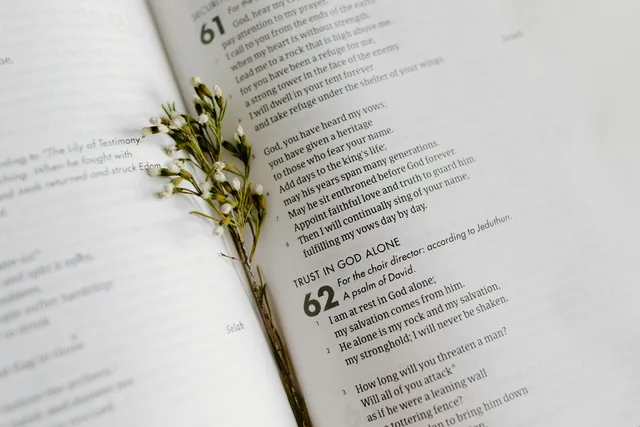
The Psalms have long served as a sanctuary for hearts seeking refuge and strength. Written across centuries, these poetic prayers give voice to moments of trembling and triumph, of trembling faith and fierce love. Within them lie countless images of God's protection-images that feel as alive today as they did thousands of years ago, when shepherds lifted their voices to the heavens and kings laid their burdens before the Almighty. In their cadence and honesty, the Psalms teach not only about divine protection but also about the courage to trust, the wisdom to wait, and the joy of belonging beneath the wings of a faithful God.
The blessings of protection in these sacred songs do not always come wrapped in miraculous deliverance or open displays of power. More often, they arrive in quiet assurances and inward strength-evidence that peace can dwell even in the midst of storms. From the cry of fear to the Song of Songs of thanksgiving, the Psalms hold a promise that no darkness is too deep for the light of divine care to reach. Every prayer becomes a spiritual shield, forged in the intimate language of love.
May the ancient songs guard your spirit and remind you that divine shelter is never distant-it is as near as your next breath.
Dwelling in the Shadow of the Almighty
Few verses have comforted as many generations as those found in Psalms 91, where the psalmist declares that those who dwell "in the secret place of the Most High" will find rest in the shadow of the Almighty. This image-the shadow as shelter-is more than poetic; it's deeply personal. It portrays divine protection not as escape from danger, but as companionship within it. To be in God's shadow is to be close enough to feel His presence move with you.
In times of uncertainty, this dwelling transforms into a sacred rhythm of trust. Ancient Israel sang these words on battlefields and in homes, confident that the One who guards Israel neither slumbers nor sleeps. Modern believers echo that confidence in hospital rooms, in long nights of prayer, and in quiet car rides when anxiety steals breath. The power lies not in the absence of hardship but in the awareness that hardship does not have the final word.
May you dwell in the shelter of divine love and rest in the assurance that even when the winds rise, you are held steady beneath eternal wings.
May every fear that approaches your heart meet the armor of peace that comes from trusting the Holy One.
Guarded Paths and the Wisdom to Walk Them
Protection in the Psalms is not merely physical-it is also moral and spiritual. Many Psalms remind readers that safety is found in walking wisely, in aligning the heart with God's will. Psalms 1 begins this journey by describing the blessed person as one who delights in divine instruction. The protection it describes comes not from walls or weapons, but from choices: the planting of roots beside life-giving streams. To follow wisdom, the psalmist suggests, is to live in resonance with divine order, and such harmony becomes its own kind of shield.
Today, this blessing is relevant in a world overflowing with competing voices. Protection may come through discernment-the grace to sift noise from truth, impulse from conviction. The Psalms invite us to walk in counsel that leads to flourishing, to surround ourselves with words and people that encourage rather than corrode the spirit.
May your steps be guided by wisdom so that every decision becomes an act of preservation and purpose.
May discernment guard your mind, steering you away from harm and toward the flourishing paths of peace.
Strength in the Valley
Protective blessings often shine brightest in the shadows of suffering. Psalms 23 paints this with tender familiarity: "Even though I walk through the valley of the shadow of death, I will fear no evil." The Psalms moves with calm confidence from threat to trust, from wandering to guidance. Protection does not remove the valley; it transforms the walk through it. In this remarkable image, faith becomes courage wrapped in gentleness.
The psalmist's faith-that divine companionship endures even when everything looks lost-speaks to the universal human condition. Every valley, whether emotional or physical, invites a blessing that arises from remembrance. To remember past mercies is itself a form of protection, a reminder that we do not face the future alone.
May courage be the lantern that lights your steps through every valley, illuminating your path with hope stronger than fear.
May the Shepherd's rod and staff, symbols of both comfort and correction, guide you safely to still waters.
The Refuge of Peace
Protection also reveals itself through peace-peace not as absence of conflict, but as a deep, enduring stillness that resists chaos. Psalms 46 offers one of the most resounding expressions of this blessing, describing God as "our refuge and strength, a very present help in trouble." In this Psalms, even as mountains crumble and waters roar, the divine presence sustains an inner calm that cannot be shaken.
Such peace is not achieved by retreating from the world but by recognizing that beneath all disorder lies the quiet certainty of God's eternal reign. Protection here becomes a steady heart, a tranquility that refuses to cave under pressure. The Psalms concludes with the command, "Be still, and know that I am God." It is a reminder that sometimes the fiercest form of defense is stillness born from trust.
May serenity fill your days, granting you the grace to be still. Let peace rise like a fortress around your heart.
May you find calm amidst chaos and remember that stillness itself is a sacred shield.
When Fear Meets Faith
Many of David's laments echo with anxiety and doubt-but interwoven through them is an unyielding thread of faith. Psalms 27 opens with bold confidence, declaring that "The LORD is my light and my salvation; whom shall I fear?" Here, the psalmist faces adversaries and uncertainty not with denial, but with spiritual defiance. The act of proclaiming faith in the face of fear becomes a profound form of protection.
Every believer at some point stands between fear and faith, learning to lean toward the latter even when it feels fragile. The Psalms teach that God's protection often comes through inner transformation-the way fear dissolves when seen through the lens of divine presence. Courage blooms in those moments, watered by trust.
May faith rise in you like morning light, gently pushing back the shadows of fear until only confidence in divine goodness remains.
May every trembling doubt become a doorway to deeper trust, and may that trust shield your heart in times of trial.
Joy as a Fortress
The Psalms reveal that joy itself is protective. In Psalms 16, joy springs from knowing that one's life is secure in divine hands: "You make known to me the path of life; in your presence there is fullness of joy." This joy is not superficial optimism-it is a resilient spirituality that refuses to let sorrow have the final word. When joy is rooted in divine presence, it becomes a fortress against despair.
To live under this blessing means refusing to surrender delight even when the world invites fear or cynicism. It requires nurturing wonder through gratitude, Song of Songs, and sacred remembrance. Protection, then, is also about spiritual vitality-keeping the flame of joy alive through praise.
May the fullness of joy be your armor, guarding your heart from bitterness and despair.
May your laughter, gratitude, and hope weave a wall of light that no darkness can breach.
Health of Body and Spirit
Psalms 103 speaks of renewal, of youth restored like the eagle's. Within its verses lies an understanding of wholeness that connects body, soul, and spirit. Protection is not only about safety from harm but about the vitality that flows from divine compassion. The psalmist remembers the One "who forgives all your iniquity, who heals all your diseases," linking forgiveness with restoration. This is ancient holistic wisdom-the strength of the body sustained by peace of the soul.
Health arises where faith and care intertwine. While the Psalms remind us that mortality is part of the human story, they also echo a conviction that every breath is blessed, every heartbeat wrapped in mercy. In remembering this, one finds both theological depth and practical compassion-a call to honor the sacredness of life itself.
May divine compassion renew your strength, bringing healing to body and restoration to soul.
May every breath remind you that life itself is a sacred gift worth cherishing and protecting.
Compassion as a Shield
One of the quiet truths of the Psalms is that protection often flows outward, not just inward. Those who receive mercy become channels of mercy. Psalms 41 declares that those who consider the poor will be delivered in times of trouble. In other words, compassion itself becomes protective. When the heart opens to others, it creates a spiritual web of grace, connecting giver and receiver in divine favor.
Kindness is not weakness. It is a way of aligning oneself with the nature of God, who "is gracious and full of compassion." By reflecting this character, we participate in a pattern of mutual preservation-the kind of world-building that shelters others as surely as it shelters us.
May kindness guard you as you guard others, forming a circle of compassion where no hurt goes unanswered by love.
May every act of mercy sow seeds of divine protection that blossom in unexpected seasons.
The Blessing of Purpose
Psalms 138 voices gratitude for divine faithfulness and concludes with a striking affirmation: "The LORD will fulfill his purpose for me." Protection, here, is not just about safety but about the assurance that one's life has meaning. To be preserved by God is to be preserved for something. Every experience, trial, and triumph becomes part of that unfolding purpose.
In difficult times, this promise can reorient the heart. Instead of asking merely to be sheltered from pain, the soul learns to ask for resilience to continue its work. That is the essence of purposeful protection-a divine commitment not only to survival but to significance.
May clarity of purpose protect your spirit from despair, sustaining your work in alignment with divine intention.
May every challenge refine your calling, turning endurance into testimony.
Faith's Horizon
The Psalms repeatedly look beyond immediate struggle toward enduring hope. Psalms 121, for instance, lifts the eyes to the hills, asking, "From where will my help come?" The answer resounds through time: "My help comes from the Lord, who made heaven and earth." There is poetry here, but also theology-the Creator's boundless scope of protection covers the smallest worries and the grandest fears.
Faith's horizon stretches further than we can see. Even when external safety falters, faith pushes vision beyond temporary hardship to eternal promise. In that broad view, protection becomes less about insulation and more about participation in divine continuity-a trust that life and love will ultimately prevail.
May faith lift your eyes beyond fear, revealing a horizon wide with promise and peace.
May your heart rest in the Maker of the mountains, knowing that every ascent brings you closer to light.
Love as the Final Shield
Psalms 136 repeats a simple refrain: "His steadfast love endures forever." Through war, famine, hope, and deliverance, the psalmist anchors every story in this unshakable truth. Love is both shield and Song of Songs, the sustaining force that holds creation together. In divine love, protection reaches its purest form-not as the absence of pain, but as the unwavering assurance that nothing can separate us from sacred care.
Ultimately, the blessings of protection in the Psalms lead us back to this love. Every invocation of safety, courage, peace, or wisdom circles back to the central promise that the heart of God is a refuge without end. Love guards not by isolating, but by enveloping. It transforms vulnerability into belonging and fear into fidelity.
May steadfast love surround you and those you cherish, forming an unbreakable shelter of grace.
May your trust in divine love become the armor that no loss or grief can pierce.
A Benediction from the Songs of the Soul
To walk through the Psalms is to walk through the spectrum of human emotion, bound together by one radiant thread-hope in divine protection. The ancient poets who voiced these cries and praises knew what it meant to be anxious, threatened, and weary. They also knew what it meant to find solace in prayer, to glimpse divine shelter in mercy's touch. Their songs remain alive in the mouths of countless people who, generation after generation, whisper or shout them into the air when they need to remember that they are not alone.
Protection, in the end, is multifaceted. It is wisdom and courage, peace and kindness, joy and health, purpose and love-all woven together into the living fabric of faith. The Psalms continue to offer these blessings across centuries, speaking to the fierce resilience of the human spirit joined with divine compassion. To receive them is to step into an ancient conversation that still has power to heal and to guard the soul.
May the blessings of the Psalms enfold your life like sunlight after a storm-proof that divine protection remains, steadfast as the love that inspired every Song of Songs.