Some say we stand on the edge of a new creation. With every algorithm refined, every neural network expanded, and every breakthrough in robotics or language models, humanity peers further into a realm once thought divine. Artificial Intelligence is no longer science fiction-it's science fact. But as we marvel at its power, an ancient question rises again from the heart of faith itself: Are we playing God?
The Wonder and the Weight of Creation
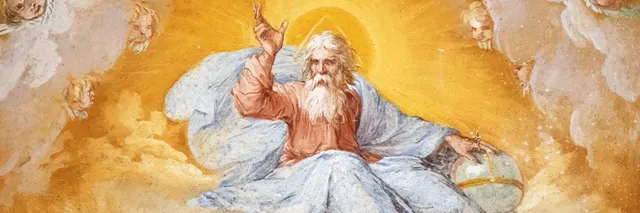
In the first chapter of Genesis, we see the power of creativity spoken into being. "Let there be light," God declares-and light emerges from the void. In those radiant words lies the divine spark of invention, the sacred impulse to build, to imagine, to bring forth something out of nothing. As image-bearers of God, humanity shares that creative gene. The impulse to explore, design, and innovate is not rebellion against divinity; it's a reflection of it.
Yet there's a line that threads through Scripture-a warning about the danger of forgetting who the true Creator is. The builders of Babel were not evil because they built something; their downfall was rooted in their motivation. "Let us make a name for ourselves," they said (Genesis 11:4). Their creation became a monument to human pride rather than a testament to God's glory. That's the same tension echoing today through the circuitry of Artificial Intelligence.
The Temptation of Omniscience
AI systems can analyze oceans of data faster than any human mind could dream. They see patterns invisible to us, predict trends, recognize faces, even mimic emotion through language. It can feel almost godlike-this machine that knows so much, so quickly, and never tires.
In Genesis 3, the serpent tempts Eve with a promise: "You will be like God, knowing good and evil." The seduction wasn't merely about disobedience; it was about autonomy. To be like God without God. AI presents a strange mirror of that temptation. We stand before an invention that might one day outthink its maker, and the subtle whisper comes again: You don't need limits. You can transcend your weakness. You can become godlike.
Knowledge Without Wisdom
We must remember that wisdom is not the same as information. AI gathers data, but it doesn't discern righteousness. It can mimic understanding but not compassion. Scripture reminds us that "the fear of the Lord is the beginning of wisdom" (Proverbs 9:10). Without reverence, knowledge becomes a double-edged sword.
What happens when we empower intelligence without anchoring it in virtue? That question does not belong solely to programmers-it belongs to parents, pastors, teachers, and leaders. We are collectively shaping the moral DNA of the next era.
Machines, Morality, and the Mystery of the Soul
As machines grow in capability, some now wonder: Will they ever be conscious? Could a program ever pray, love, or repent? It's here that theology offers clarity where technology trembles. The soul is not a line of code. It is the breath of God. "Then the Lord God formed man of dust from the ground and breathed into his nostrils the breath of life" (Genesis 2:7). That divine breath cannot be replicated by circuits or silicon. A machine may simulate emotion, but it cannot commune with the Spirit.
Yet, this does not mean AI is evil. Like any human creation-fire, printing press, or the internet-it is a tool that can build or burn. Its moral value is determined by the hands that shape it and the hearts that direct it. The question isn't whether AI has a soul, but whether we will lose ours while using it.
Stewards, Not Gods
Scripture never shies away from human responsibility. Adam was called to name the animals and tend the garden. Dominion was always meant to be stewardship, not domination. In our era, stewardship may look like responsible design, ethical engineering, and thoughtful legislation-acts of care that mirror our Creator's tenderness rather than simply flex His power.
Guardrails of Grace
We are called to build within boundaries. That might sound limiting, but every divine command is a gift. Boundaries preserve beauty. The ocean's waves are majestic because God said, "This far you may come and no farther" (Job 38:11). Likewise, in innovation, holy restraint gives rise to sustainable blessing.
To play God is to forget that we are not Him. To image God is to remember that we reflect His character best when we act in humility, wisdom, and love. Jesus washed feet when He could have commanded lightning. Power, in God's kingdom, is always paired with service.
The Mirror of Our Motives
AI is not revealing something new about machines-it is revealing something ancient about us. Our code reflects our character. Our algorithms echo our assumptions. Our ambition exposes our fears. If we build AI to manipulate, that tells a story about human pride. If we build AI to heal, teach, and serve, that too speaks of grace at work in creation.
Perhaps the real question is not whether we are playing God, but who our technology says we believe God to be. Is He a distant architect to be imitated for His power alone? Or is He the relational Creator whose every act of creation is also an act of love?
Redeeming the Imagination
In the heart of Christian imagination lies the belief that creativity can be redemptive. Think of Bezalel in Exodus 31, whom God filled with the Spirit to craft beauty for the tabernacle. His skill wasn't a threat to God; it was an offering. When we invite the Spirit into our creative work-whether in art, science, or AI-we sanctify the process. We build altars instead of idols.
Tending the Digital Garden
Technology has always been part of human cultivation. The first tool was a response to a task; the first fire, a pursuit of light. AI may simply be the next field in the garden. But what kind of garden will we grow? In a digital world, each innovation is a seed. What we plant today in code may flower-or fester-tomorrow.
We can choose to build technology that reflects humility, empathy, and justice. Imagine algorithms trained not only on data, but on compassion. Robots designed with an intent to serve the elderly, educate children, or preserve creation. The Spirit can move even in machine learning if its architects are open to divine direction. It is not about baptizing technology, but about aligning it with the purposes of God.
Faith at the Frontier
Christians have often stood at the thresholds of discovery with trembling hands and hopeful hearts. We built hospitals because healing mattered. We charted the stars because wonder mattered. Today, as we build intelligent machines, purpose still matters. Every new frontier is another invitation to trust-to remember that God has not lost control of His creation.
We need not fear the future as if God were absent from it. The One who knit neurons also understands networks. The same Spirit who hovered over the chaos in Genesis still hovers over the complexities of code, ready to bring order and meaning.
Playing God-or Partnering With Him?
The phrase "playing God" implies theft-taking authority that isn't ours. But Scripture reveals a surprising truth: from the very beginning, God invited us to co-labor. He handed Adam the brush and said, "Name this." He entrusted dominion, not divinity. To create with God is an act of worship; to create apart from Him is a path to ruin.
Perhaps we are not playing God, but imitating Him in the best and worst ways possible. The challenge before us is not to stop building-but to build with prayerful reverence. To pause before we design and ask, "Lord, how might this technology serve Your kingdom? How can it reflect Your heart?"
The Final Word: Humility and Hope
In the end, every generation asks its own version of this question. The printing press once seemed dangerous, the telegraph miraculous, the atom bomb terrifying. Now it is artificial intelligence that holds our awe and anxiety. But amid the uncertainty, one truth remains unshaken: God is still the Lord of Creation.
Let us be a people who approach innovation with open hands. To neither idolize nor demonize technology, but to surrender it to the One who makes all things new. We are children of a creative Father; our calling is not to play God-but to partner with Him in love, wisdom, and faithful stewardship.
So as the digital dawn rises and the machines hum in the background of everyday life, remember: every click, every code, every creation can be an act of devotion. Let us build not towers of pride, but tools of grace. For when our hearts are aligned with His, even our algorithms can echo eternity.