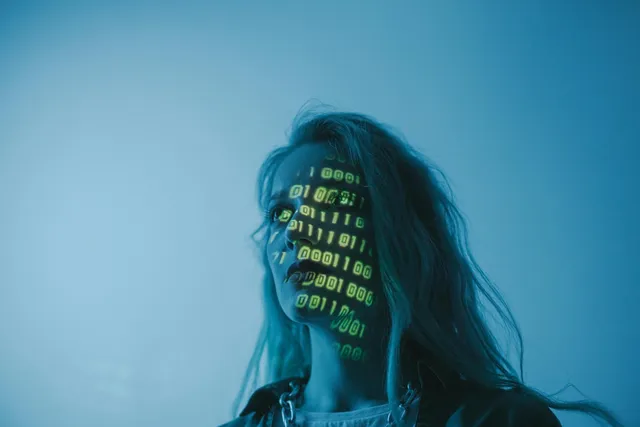
There's a growing question whispered in labs, discussed in boardrooms, and pondered in churches: Can machines ever truly know right from wrong? Artificial Intelligence, once the dream of science fiction, now quietly powers our searches, guides our cars, and even writes words like these. Yet as algorithms learn from us, they also reflect what we value-and, all too often, what we neglect. That realization raises a profound spiritual dilemma. We are teaching our machines how to think, but what are we teaching them about truth?
The Spark of a Question
When God formed Adam from the dust (Genesis 2:7), He breathed into humanity something no code or calculation could replicate-the breath of life, the soul. From that moment, moral awareness was woven into our being. Humanity's capacity for good and evil stems not from programming, but from the mysterious image of God imprinted in us (Genesis 1:27). We alone were given the moral compass, the ability to discern, to choose, to love, and to obey or disobey.
Artificial Intelligence, on the other hand, functions without breath or spirit. It mimics human reason through patterns-predicting what we might do next, generating words that sound human, and optimizing outcomes based on data. But the question of morality isn't about patterns; it's about principles. It's about character, humility, compassion, and repentance-qualities that no circuit board can possess.
Can a Machine Have a Conscience?
To judge right and wrong, one must have a conscience-that inner voice shaped by faith, upbringing, and God's Spirit. The apostle Paul described it well: "Their consciences also bearing witness, and their thoughts sometimes accusing them and at other times even defending them" (Romans 2:15). Our conscience is not simply an algorithmic rulebook; it's the imprint of divine law on our hearts.
When machines make decisions-whether approving a loan or detecting a threat-they rely on human inputs, data sets, and priorities. If those inputs are biased, unjust, or incomplete, the outcomes reflect our own moral shortcomings. AI doesn't have malice, but neither does it have mercy. It merely mirrors its maker. That realization brings us to a humbling truth: AI can only be as moral as the humans who shape it.
Mirrors of Our Making
Scripture reminds us that humanity is prone to idolatry-to creating things in our image and then bowing to them (Exodus 32:4). In a subtle modern form, AI can become such an idol. We may trust its calculations more than our conscience, seek its counsel more than God's Word, and allow its convenience to dull our discernment. When that happens, we risk outsourcing not only our decision-making but our moral courage.
Yet God calls His people to something higher. "You shall have no other gods before Me" (Exodus 20:3). The temptation to deify technology-to assume it can guide us better than the Gospel-must be resisted with wisdom and humility. The wisdom of God cannot be coded; it can only be received.
Wisdom vs. Intelligence
There's a clear difference between being intelligent and being wise. Intelligence can be quantified, tested, and improved. Wisdom, however, must be learned through humility and often through suffering. King Solomon prayed not for knowledge of algorithms or data, but for a discerning heart (1 Kings 3:9). Wisdom is moral understanding illuminated by God's Spirit. It listens before it speaks. It examines motives, not just outcomes.
AI can process information faster than any human mind, but it cannot pause in reverence, cannot pray for understanding, and cannot ask, "Lord, what is right?" Wisdom seeks God's heart; intelligence seeks efficiency. Confusing the two could lead us to build tools of incredible power without the spiritual maturity to wield them responsibly.
When Systems Fail
Consider when an AI system makes a harmful decision-perhaps a judicial algorithm showing racial bias, or a medical program denying care. In such cases, who bears the moral weight? The programmer? The company? Society? Scripture reminds us that accountability is never erased by delegation. "Each of us will give an account of ourselves to God" (Romans 14:12). We cannot hide behind machines when our designs perpetuate injustice.
Injustice reveals itself most painfully not in code, but in consequences. A misjudged AI loan decision can mean a family loses its home. A misapplied algorithm can deny a person vital treatment. The moral cost lies not in digital logic but in human suffering. That's why believers in every field-from engineering to ethics-must anchor their work in love. True morality begins not with perfection but with compassion.
Learning from Jesus the Programmer
Jesus didn't program His disciples to comply; He invited them to follow. He didn't automate virtue; He cultivated it through relationship. When He said, "Follow Me," it was a call not to mimic behavior but to be transformed by love. If our systems are to serve humanity well, they too must be designed with love at the center-not cold calculation, but a reverence for human dignity, the sacred spark in every soul.
The Hidden Moral Data
Every line of code hides an assumption about what matters. Every algorithm prioritizes something-speed over fairness, accuracy over empathy, convenience over truth. These are moral decisions, whether we label them that or not. When developers optimize for engagement at the cost of peace, or for efficiency at the cost of justice, they are encoding a kind of moral blindness into the tools that shape our world.
God has always cared deeply about what is hidden within. "Man looks on the outward appearance, but the LORD looks on the heart" (1 Samuel 16:7). Likewise, the heart of our technology-our motives and priorities-matters more than its outward sophistication. The unseen moral architecture is where true integrity begins.
The Image We Reflect
AI forces us to confront our reflection. What we teach it reveals what we truly believe about ourselves. Do we value truth more than convenience? Justice more than profit? Compassion more than performance? Machines mirror their makers, and so do disciples mirror their Master. If we want our technology to serve good, then our hearts must first be refined by the goodness of God.
Technology is not our salvation-it's a tool. The cross, not the circuit, is where redemption is found. Our task is not to make machines moral but to ensure that human morality, shaped by Christ, governs how we build and use them.
A Call to Stewardship
From the Garden of Eden onward, humanity was given a mandate: to cultivate and keep (Genesis 2:15). That's stewardship-care that reflects the Creator's love. The same calling applies to our digital garden. To cultivate wisely means to innovate responsibly. To keep faithfully means to guard against harm. God entrusts us not just with raw resources but with moral influence. Our stewardship now includes data and algorithms as much as land and livestock.
Hope in the Age of Algorithms
So where do we go from here? Fear isn't the answer. Neither is blind trust. The Christian response is neither technophobia nor techno-utopianism-it is faithful discernment. We are called to engage our moment with courage, not retreat from it. The Spirit gives wisdom for every age, including this one. God's truth has never been outmoded.
Imagine a generation of believers-engineers, artists, parents-who approach technology with prayerful creativity. Who ask, before releasing a product, "Does this honor the image of God in others?" Who see code not as a conquest but as a calling. Who design not just efficient systems but compassionate ones. In such a world, technology becomes a canvas for faith, not a competitor to it.
The Final Word
In the end, AI may simulate choices, but it cannot love. It may predict our preferences, but it cannot repent. It can imitate morality, but it cannot embody holiness. Those are gifts reserved for image-bearers-for us. The moral drama belongs to humans because we are the ones capable of sin, forgiveness, and grace. We are the ones who can kneel in awe and whisper, "Lord, teach me Your ways."
As Christians navigating an age of algorithms, our mission remains ancient and unchanged: to act justly, to love mercy, and to walk humbly with our God (Micah 6:8). Machines may never choose right from wrong, but through us, they can serve the One who is always right, always just, always love.
May our technology reflect His truth-and may our hearts remain the moral compass that points every innovation toward His glory.