Nahum, the thirty-fourth book of the Bible, proclaims good news to Judah: the LORD has decreed the end of Nineveh, capital of Assyria. The empire that devastated nations and taunted God will fall under His just wrath.
The book is a poetic whirlwind—storm, flood, chariots, and taunts—assuring God's people that oppressive powers do not reign forever. The LORD is slow to anger yet great in power, and He will not clear the guilty.
Chapters of Nahum
What is Nahum about?
Nahum opens with a majestic theophany (1:2–8): the LORD, jealous and avenging, thunders over creation; mountains quake, seas dry, and enemies melt. Yet the same God is a stronghold for those who take refuge in Him. The prophet then turns to Nineveh: plots against God will be cut off; a messenger brings good news—"keep your feasts, fulfill your vows"—for the yoke of Assyria is broken.
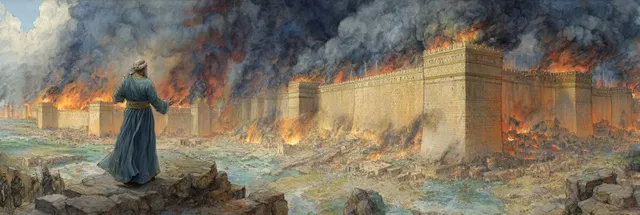
Chapters 2–3 vividly portray the siege and sack of Nineveh: flashing swords, racing chariots, breached walls, floodwaters, plundered wealth, and a lion's den left empty. Nineveh is exposed as a bloody city, full of lies and prey, its charms and sorceries unable to stave off judgment. Taunt songs compare Assyria to fallen Thebes, insisting that no one will mourn her ruin. The empire that once devoured others now becomes prey.
Nahum's poetry is tight and terrifying, but its aim is comfort: to assure Judah that God's justice reaches the highest thrones. History bends toward the downfall of arrogant violence and the peace of those who trust the LORD.
Who wrote Nahum?
Attributed to Nahum the Elkoshite; little else is known of the prophet apart from this book.
What's Nahum's meaning and significance?
Nahum teaches that divine justice is certain: God is patient, but He will confront violent oppression. For the humble, His power is refuge; for the ruthless, it is ruin. God's sovereignty over empires means that tyranny has an expiration date.
Is Nahum an important book?
Nahum is important for the theology of justice, sovereignty, judgment on empires, refuge, and hope. It balances God's compassion (for the oppressed) with His wrath (against cruelty) and affirms that the good news includes the end of evil's reign.
When was Nahum written?
Likely composed in the 7th century BCE—after the fall of Thebes (663 BCE) and before Nineveh's fall (612 BCE).
What are the main sections of Nahum?
Nahum moves from theophany and promise (God as avenger/refuge), to oracle against Nineveh, to vivid battle scenes and taunts culminating in the city's total collapse.
The main sections of Nahum are:
-
The LORD revealed as avenger and refuge Nahum 1Divine theophany; comfort for Judah; decree against Nineveh's plots and yoke.
-
Siege and fall of Nineveh Nahum 2Chariots, breached walls, flood and plunder; the lion's den laid waste.
-
Woe to the bloody city Nahum 3Indictment for bloodshed and sorcery; comparison to Thebes; total, unmourned ruin.
Key Elements of Nahum
Understanding the main themes, important people, significant places, and key concepts in Nahum helps us grasp its message and apply it to our lives today.
Key Themes
Key Concepts
Key People
Key Places
Chapters of Nahum
Select a chapter to read and study: