Matthew, the fortieth book of the Bible and the first Gospel, presents Jesus as the promised Messiah who fulfills the Law and the Prophets. From the genealogy and birth narratives to the Sermon on the Mount, parables, miracles, and the Great Commission, Matthew highlights Jesus's authority in teaching and deed and His mission to form a people who embody God's kingdom.
Written with strong ties to the Old Testament, Matthew repeatedly shows that events in Jesus's life "took place to fulfill what was spoken by the prophet." The Gospel culminates in Jesus's death and resurrection, after which He commissions His followers to make disciples of all nations.
Chapters of Matthew
What is Matthew about?
Matthew opens by rooting Jesus in Israel's story: a genealogy from Abraham and David, a virgin birth, and the title Immanuel ("God with us"). Magi from the nations acknowledge the king, while Herod's rage drives the holy family to Egypt—each scene framed by fulfillment citations. John the Baptist prepares the way; at Jesus's baptism, heaven affirms Him, and in the wilderness He resists temptation with Scripture.
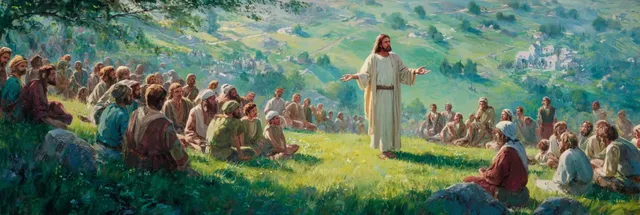
Jesus proclaims, "Repent, for the kingdom of heaven is at hand," calls disciples, and teaches the Sermon on the Mount (chs. 5–7): beatitudes, deeper righteousness, prayer, and wise obedience. Deeds of power confirm His word—healings, exorcisms, authority over nature. He sends the Twelve, speaks parables of the kingdom (ch. 13), and reveals His identity (Peter's confession, transfiguration), while confronting religious leaders over tradition, mercy, and true holiness.
In Jerusalem, Jesus enters as the humble king, cleanses the temple, and delivers judgment-sayings and the Olivet discourse. The passion narrative centers on the Passover meal, Gethsemane, betrayal, trial under Caiaphas and Pilate, crucifixion, burial, and resurrection. The Gospel closes on a Galilean mountain: the risen Lord claims all authority, commands disciple-making, and promises His presence "to the end of the age."
Who wrote Matthew?
Traditionally attributed to Matthew (Levi), the tax collector turned apostle. Many scholars see literary dependence on Mark with additional teaching material. Across Christian tradition it is received as inspired Scripture.
What's Matthew's meaning and significance?
Matthew teaches that Jesus is the Davidic and divine Son who fulfills Scripture and inaugurates God's kingdom. Disciples are called to a greater righteousness that flows from mercy, to hear and do Jesus's teaching, and to live on mission—baptizing, teaching, and obeying—under His abiding presence.
Is Matthew an important book?
Matthew is foundational for the theology of fulfillment, kingdom, discipleship, righteousness, mercy, church, mission, and presence. It frames the church's identity in the beatitudes and the Great Commission, and it shows how Jesus completes the story of Israel as Emmanuel—God with us.
When was Matthew written?
Commonly dated AD 60–90 (some earlier/later proposals). The narrative settings span the ministry years of Jesus, with composition likely within the first century.
What are the main sections of Matthew?
Matthew moves from origin and announcement, to kingdom proclamation and deeds, to major teaching discourses, and culminates in passion, resurrection, and universal commission; the outline samples these movements.
The main sections of Matthew are:
-
Origins and preparation Matthew 1–4Genealogy, birth, magi, flight and return; John's ministry; Jesus's baptism and temptation.
-
Sermon on the Mount Matthew 5–7Beatitudes, fulfillment of the Law, prayer, and the call to hear and do Jesus's words.
-
Kingdom power and mission Matthew 8–10Healings, authority over nature and demons; sending of the Twelve with kingdom instructions.
-
Parables of the kingdom Matthew 11–13Responses to Jesus; parables reveal and conceal the kingdom's growth and value.
-
Identity revealed and the way of the cross Matthew 14–20Miracles, Peter's confession, transfiguration, community instructions, and teaching on the path to Jerusalem.
-
Jerusalem, passion, and resurrection Matthew 21–28Entry as humble king; temple controversies; Olivet discourse; Last Supper, trial, crucifixion, burial, resurrection, and the Great Commission.
Key Elements of Matthew
Understanding the main themes, important people, significant places, and key concepts in Matthew helps us grasp its message and apply it to our lives today.
Key Themes
Key Concepts
Key People
Key Places
Chapters of Matthew
Select a chapter to read and study: