Joel, the twenty-ninth book of the Bible, responds to a catastrophic locust plague that has ravaged Judah. The prophet calls priests and people to fast and lament, warning that this crisis foreshadows the coming day of the LORD.
Yet Joel also promises restoration: abundant harvests, God's Spirit poured out on all flesh, salvation for all who call on the LORD, and final justice as God judges the nations and blesses Zion.
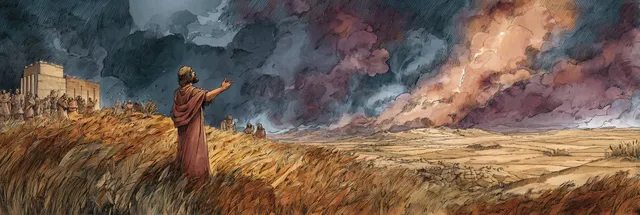
Chapters of Joel
What is Joel about?
Joel opens with the shock of total loss: vines stripped, fields ruined, offerings halted. The prophet summons elders, priests, and people to gather, fast, and cry out, for the disaster is a signpost toward the day of the LORD—a greater reckoning that draws near like an invading army.
In the center of the book comes a gracious call: "Return to me with all your heart." God's character—gracious and compassionate—grounds the hope that He will relent. Promises follow: rains restored, threshing floors full, and "the years that the locust has eaten" repaid.
Joel then lifts the horizon beyond agriculture to eschatology: God will pour out His Spirit on all flesh—sons, daughters, old and young will prophesy. Cosmic signs accompany salvation, and "everyone who calls on the name of the LORD shall be saved." The book closes with judgment of the nations in the valley of decision and with Zion secure in God's presence, a spring flowing from the house of the LORD.
Who wrote Joel?
Attributed to Joel son of Pethuel. The book is otherwise self-contained and concise.
What's Joel's meaning and significance?
Joel teaches that crisis can become call: disaster awakens repentance, and repentance meets mercy. The near day (locusts) prefigures the greater day of the LORD, when God both judges evil and pours out His Spirit to renew His people. True hope rests in returning to God and calling on His name.
Is Joel an important book?
Joel is pivotal for the theology of the day of the LORD, repentance, restoration, and the outpouring of the Spirit (cited at Pentecost). It shows how God turns ruin into renewal and anchors salvation not in pedigree but in calling on the LORD.
When was Joel written?
Date is debated: proposals range from the 9th–5th centuries BCE. Many place it in the post-exilic period due to temple focus and international outlook, though certainty is not possible.
What are the main sections of Joel?
Joel moves from devastation and lament, to call and compassion, to Spirit, salvation, and final judgment—turning a local disaster into a window on God's ultimate purposes.
The main sections of Joel are:
-
Locust plague and call to lament Joel 1Fields ruined, worship disrupted; priests, elders, and people summoned to fast and cry out.
-
Alarm and appeal; promise of restoration Joel 2:1–27Day of the LORD announced; call to return with all the heart; rains and harvests restored, years repaid.
-
Spirit outpoured and salvation offered Joel 2:28–32God pours out His Spirit on all flesh; cosmic signs; everyone who calls on the LORD will be saved.
-
Judgment of nations and Zion blessed Joel 3Nations gathered in the valley of decision; the LORD roars from Zion; Judah dwells secure and holy.
Key Elements of Joel
Understanding the main themes, important people, significant places, and key concepts in Joel helps us grasp its message and apply it to our lives today.
Key Themes
Key Concepts
Key People
Key Places
Chapters of Joel
Select a chapter to read and study: