Haggai, the thirty-seventh book of the Bible, contains four prophetic messages delivered in 520 BCE to the returned exiles. The people had neglected the temple, focusing instead on their own houses, and suffered drought and frustration as a result. Haggai urges them to rebuild God's house, promising that the LORD's presence will fill it with greater glory.
The book encourages perseverance, assuring that God will shake the nations and establish His kingdom purposes through His chosen servant.
Chapters of Haggai
What is Haggai about?
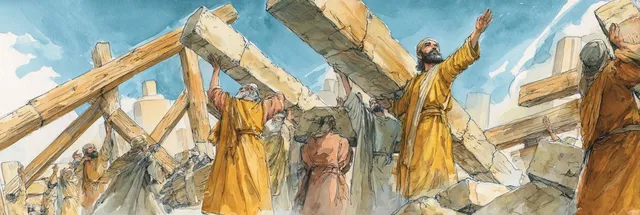
Haggai begins by exposing misplaced priorities: the people dwell in paneled houses while the temple lies in ruins. The prophet urges reflection—"Consider your ways"—and calls them back to covenant obedience. Stirred by the word and Spirit, leaders and people rise to rebuild.
A second word encourages them amid discouragement: though this house seems lesser than Solomon's temple, its future glory will surpass the former, for the LORD Himself will fill it with peace. Later messages affirm God's blessing now that the people have obeyed and close with a promise to Zerubbabel: he will be like a signet ring, a pledge of God's royal purposes.
Thus Haggai ties obedience, worship, and hope together: rebuilding God's house is the outward sign of renewed covenant fidelity and confidence in His coming reign.
Who wrote Haggai?
Attributed to Haggai, one of the post-exilic prophets alongside Zechariah.
What's Haggai's meaning and significance?
Haggai teaches that God must come first. Prosperity without His presence is empty, but obedience to His call brings blessing. The temple is not mere architecture: it is the sign of God's dwelling with His people. True hope looks beyond present weakness to the LORD's promised glory.
Is Haggai an important book?
Haggai is vital for the theology of worship, obedience, presence, covenant blessing, and future glory. It reminds God's people that faithfulness in small acts can serve great purposes and that His kingdom will prevail over the nations.
When was Haggai written?
Delivered in 520 BCE (the second year of Darius I), during the early Persian period.
What are the main sections of Haggai?
Haggai moves from rebuke of neglect, to encouragement in rebuilding, to promise of future glory, and closes with hope for God's chosen servant.
The main sections of Haggai are:
-
Rebuke and call to rebuild Haggai 1People neglect the temple for their own houses; drought exposes misplaced priorities; leaders and people stirred to obey.
-
Encouragement amid weakness Haggai 2:1–9Though the new temple seems lesser, its future glory will surpass the former; God's Spirit and peace will fill it.
-
Blessing for renewed obedience Haggai 2:10–19Past disobedience brought blight; now obedience brings blessing from this day forward.
-
Promise to Zerubbabel Haggai 2:20–23The LORD will shake the nations; Zerubbabel chosen as signet ring of God's purposes.
Key Elements of Haggai
Understanding the main themes, important people, significant places, and key concepts in Haggai helps us grasp its message and apply it to our lives today.
Key Themes
Key Concepts
Key People
Key Places
Chapters of Haggai
Select a chapter to read and study: