Esther, the seventeenth book of the Bible, tells the story of how God preserved His people through the courage of a Jewish woman who became queen of Persia. Though God is never mentioned by name, His providence is evident in every turn of the story.
When the wicked Haman plots to annihilate the Jews, Esther risks her life to approach King Xerxes (Ahasuerus), exposes the scheme, and secures deliverance. The book concludes with the institution of Purim, a festival of joy and remembrance.
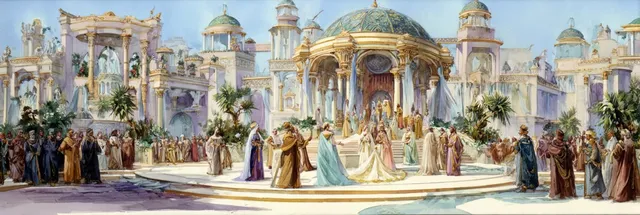
Chapters of Esther
What is Esther about?
Esther begins in the Persian court, where Queen Vashti is deposed and Esther, a Jewish exile, rises to the throne. Guided by her cousin Mordecai, she conceals her identity until a crisis forces her hand. Haman, enraged at Mordecai's refusal to bow, manipulates Xerxes into decreeing genocide against the Jews.
In a dramatic reversal, Esther boldly enters the throne room, invites the king and Haman to banquets, and at the second feast reveals Haman's plot. The king orders Haman executed on the gallows he built for Mordecai. A new decree empowers the Jews to defend themselves, and they win a decisive victory. The book ends with the elevation of Mordecai and the establishment of Purim, celebrating sorrow turned to joy and mourning to dancing.
Who wrote Esther?
Authorship is unknown; Jewish tradition sometimes associates it with Mordecai or later scribes. Likely composed during the Persian or early Hellenistic period, it has been received as inspired Scripture in Jewish and Christian traditions, though debated in antiquity because it does not mention God explicitly.
What's Esther's meaning and significance?
The book of Esther teaches that God's providence works even when unseen. His name may be absent, but His hand directs coincidences, reversals, and courage to preserve His covenant people. Esther highlights the power of faithful risk-taking, reminding God's people to trust Him in hostile settings.
Is Esther an important book?
Esther is vital for understanding God's sovereignty, hiddenness, and faithfulness in exile. It explains the origin of Purim, underscores the theme of reversal, and demonstrates that God keeps His people even when they are scattered. The story has inspired generations to trust God's unseen work and to act courageously for justice.
When was Esther written?
The events are set in the Persian Empire during the reign of Xerxes I (486–465 BCE). Composition likely occurred between the 5th–4th centuries BCE.
What are the main sections of Esther?
Esther moves from banquets and plots, to intercession and reversals, to victory and celebration. It shows how God turns threats into deliverance through courageous faith.
The main sections of Esther are:
-
Esther becomes queen Esther 1–2Vashti deposed; Esther chosen as queen; Mordecai uncovers a plot.
-
Haman's rise and decree of destruction Esther 3Haman enraged at Mordecai; manipulates the king to decree genocide.
-
Esther's decision and intercession Esther 4–5Mordecai urges Esther; she resolves to act; first banquet with the king and Haman.
-
Reversal at the second banquet Esther 6–7The king honors Mordecai; Esther exposes Haman; Haman executed.
-
Deliverance and defense Esther 8–9A new decree empowers the Jews; enemies defeated; Purim established.
-
Mordecai exalted Esther 10Mordecai honored as second in rank to the king.
Key Elements of Esther
Understanding the main themes, important people, significant places, and key concepts in Esther helps us grasp its message and apply it to our lives today.
Key Themes
Key Concepts
Key People
Key Places
Chapters of Esther
Select a chapter to read and study: