Habakkuk, the thirty-fifth book of the Bible, is a dialogue between a perplexed prophet and God. Habakkuk wrestles with the problem of evil and injustice: why does God allow violence, and why would He use Babylon, a ruthless nation, to judge His people?
The book climaxes with God's answer: "the righteous shall live by his faith." Habakkuk's prayer-song closes the book in trust, rejoicing in God's salvation even when fields are barren and flocks are gone.
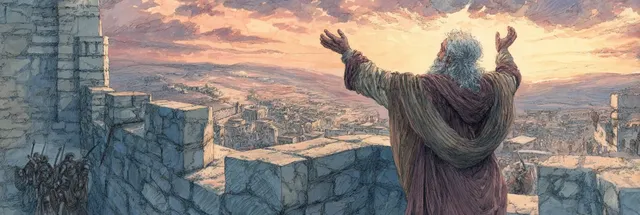
Chapters of Habakkuk
What is Habakkuk about?
Habakkuk opens with complaint: violence fills Judah, and the law seems paralyzed. God replies that He is raising up the Chaldeans (Babylonians) as instruments of judgment. Shocked, Habakkuk objects: how can God use a more wicked nation to punish His own?
God answers with a vision: write it plainly, wait for it—it will surely come. The central line resounds: "The righteous shall live by his faith." A series of woes then condemns Babylon's greed, violence, idolatry, and arrogance.
The final chapter (a psalm) recalls God's mighty acts in history—storm, mountains trembling, rivers raging—as the prophet trembles yet declares: "Though the fig tree should not blossom… yet I will rejoice in the LORD." The book moves from protest to praise, showing that faith survives even unanswered questions.
Who wrote Habakkuk?
Attributed to Habakkuk, a prophet otherwise unknown, likely a contemporary of the late 7th century BCE.
What's Habakkuk's meaning and significance?
Habakkuk teaches that faith is the path through confusion. God's justice may be delayed, and His ways may seem baffling, but His promises are sure. The righteous endure by trusting Him, not by sight. Judgment will come on the proud, but life is given to those who live in faith.
Is Habakkuk an important book?
Habakkuk is vital for the theology of faith, justice, sovereignty, patience, and worship amid suffering. Its central verse is quoted in the New Testament (Romans, Galatians, Hebrews) as a foundation for justification by faith. The book shows how doubt can lead to deeper trust.
When was Habakkuk written?
Likely composed in the late 7th century BCE (around 609–605 BCE), just before Babylon's ascendancy over Judah.
What are the main sections of Habakkuk?
Habakkuk flows from complaint, to God's surprising answer, to vision and woes, and ends in faith-filled praise.
The main sections of Habakkuk are:
-
First complaint and God's reply Habakkuk 1:1–11Habakkuk laments injustice; God announces He will raise up the Babylonians.
-
Second complaint and God's reply Habakkuk 1:12–2:20Prophet questions God's use of Babylon; God promises judgment on the proud and life by faith.
-
Prayer of trust and praise Habakkuk 3A psalm recalling God's mighty deeds; resolves to rejoice in Him despite loss.
Key Elements of Habakkuk
Understanding the main themes, important people, significant places, and key concepts in Habakkuk helps us grasp its message and apply it to our lives today.
Key Themes
Key Concepts
Key People
Key Places
Chapters of Habakkuk
Select a chapter to read and study: