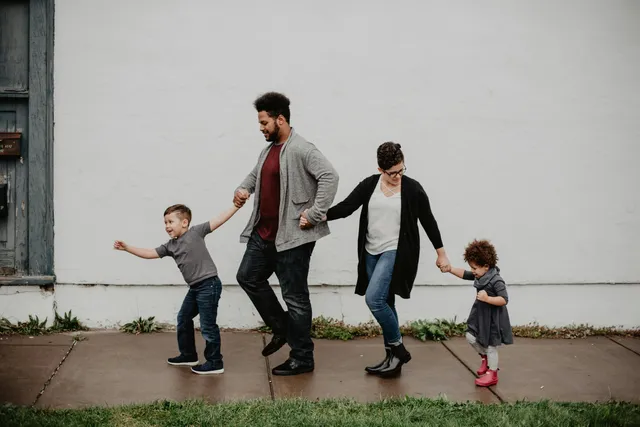
There is a particular silence that falls over a dinner table when two adult siblings are in the same room and something old is still unresolved. Everyone else keeps talking. Plates get passed. But the two of them have gone quiet in a way that is louder than the conversation, and the family has learned to arrange itself around that silence the way a river arranges itself around a rock. Maybe it started with a comment at a wedding. Maybe it started thirty years ago over a bicycle, a report card, or the way a mother's face lit up for one child and not the other.
If this is your family, you are in deep biblical company. Scripture does not present siblings as a sentimental backdrop to the real action. It puts them at the center, and it tells the truth about them. The second generation of humanity produces a murder. The patriarchs are a long chain of brothers who cheat, flee, and weep. Even in Jesus's most famous parable, the last word belongs not to the son who ran away but to the one who stayed home and seethed. The Bible takes sibling rivalry seriously because it is one of the oldest and most ordinary shapes that sin takes in a human heart.
The First Family's First Murder
Genesis 4 moves with terrible speed. Cain brings an offering from the ground, Abel brings the firstborn of his flock, and God has regard for Abel's offering but not Cain's. The text does not pause to explain the difference to our satisfaction, which is itself part of the lesson. What it does pause for is Cain's face. "Cain was very angry, and his face fell." God speaks to him directly, almost tenderly: "Why are you angry? And why has your face fallen?" Then the warning that every family should have hanging in the hallway: "Sin is crouching at the door. Its desire is for you, but you must rule over it."
Notice that God gives Cain a chance. The rivalry is not yet a crime. It is still a feeling with options. Cain could have gone to his brother and asked what he had done differently. He could have brought a better offering the next season. Instead he invites Abel out to the field, and the first death in Scripture is a brother's death at a brother's hand. When God asks where Abel is, Cain gives the line that has echoed through every family argument since: "Am I my brother's keeper?"
The honest answer, running from Genesis all the way to the cross, is yes. You are. Envy says the opposite. Envy insists that your brother's blessing is a subtraction from your own, that there is only so much approval in the world and he is standing where yours should be. That lie is what makes a face fall, and a fallen face, left alone long enough, eventually goes looking for a field.
Jacob and Esau: A Rivalry the Parents Fed
The story of Jacob and Esau is not simply about two brothers who could not get along. It is about a household organized around favoritism. Genesis 25:28 says it with a bluntness that should make every parent flinch: "Isaac loved Esau because he ate of his game, but Rebekah loved Jacob." Two parents, two favorites, one house. The birthright sold for a bowl of stew and the blessing stolen with goat skins on a smooth neck are not random acts of greed. They grow in soil that two adults tilled for years.
When Esau discovers the theft, he lets out "an exceedingly great and bitter cry" and begs his father, "Bless me, even me also, O my father!" It is one of the most wrenching lines in Genesis, and anyone who has ever felt like the unchosen child in their own home recognizes it instantly. Esau then does what wounded siblings do: he starts counting the days until he no longer has to hold back. Jacob runs. The family breaks into pieces that will take twenty years to gather.
What Reconciliation Actually Looked Like
The reunion in Genesis 33 deserves a closer look, because it is more realistic than the version we usually imagine. Jacob prepares obsessively. He sends waves of gifts ahead of him, divides his family into groups in case of attack, wrestles with God all night at the Jabbok, and limps toward his brother bowing to the ground seven times. He is terrified. Then Esau "ran to meet him and embraced him and fell on his neck and kissed him, and they wept."
Jacob's response is remarkable: "I have seen your face, which is like seeing the face of God, and you have accepted me." Forgiveness from a brother can feel like that, like an unearned glimpse of mercy from on high. And yet the chapter ends with the two men settling in different places. They do not become business partners. They do not merge households. Reconciliation is not always the restoration of closeness; sometimes it is simply the end of war. For some families, that is not a failure. That is a great deal of grace.
Joseph's Brothers and the Long Memory of Envy
Jacob, having been shaped by favoritism, repeats it. He gives Joseph the robe, and Genesis 37:4 tells us the brothers "hated him and could not speak peacefully to him." The inability to speak peacefully is the stage right before the pit. Words go first, then presence, then safety. By the time they strip the coat off him and sit down to eat lunch while he cries from the cistern, the hatred has been fermenting for years.
What makes the Joseph narrative so useful for families is that it refuses to rush the repair. When the brothers finally stand before the Egyptian official they do not recognize, Joseph does not immediately throw his arms around them. He tests them. He engineers a situation in which they could abandon another favored younger brother, Benjamin, exactly as they once abandoned him. And Judah, the one who originally suggested selling Joseph for silver, steps forward and offers himself in Benjamin's place rather than break his father's heart again. Only then does Joseph break down weeping so loudly that the Egyptians hear it through the walls.
Wanting Proof That Someone Has Changed
That instinct to look for evidence is not cynicism, and it is not a failure of faith. Joseph forgives, but he also wants to know who these men have become. Many Christians carry needless guilt here, believing that forgiveness means pretending nothing happened and handing back full trust on the spot. Scripture does not teach that. Forgiveness releases the debt; trust is rebuilt by behavior over time. A sibling who has harmed you can be forgiven in your heart today and still be someone you watch carefully for a while.
What Joseph eventually arrives at is the sentence that reframes his whole life: "As for you, you meant evil against me, but God meant it for good, to bring it about that many people should be kept alive" (Genesis 50:20). He does not soften what they did. He names it as evil. He simply refuses to let it be the final authority over his story.
Miriam and Aaron: When Siblings Compete as Adults
Not every rivalry involves children squabbling over a coat. In Numbers 12, Miriam and Aaron criticize their brother Moses over his Cushite wife, but the real complaint surfaces in the next breath: "Has the Lord indeed spoken only through Moses? Has he not spoken through us also?" This is grown-up sibling rivalry in its most respectable disguise, dressed up as a concern about the family and really about standing.
Many adult siblings know this exact conflict. Who gets credit for caring for aging parents. Whose career the family brags about. Whose opinion carries weight when decisions get made. The language is never "I want to be the important one." It is always about something more defensible.
God's response is swift, and Miriam is struck with a skin disease. What happens next is the point. Moses, the brother who was criticized, immediately cries out, "O God, please heal her, please." No lecture, no vindication speech, no reminder that he was right. He intercedes. And the whole camp of Israel waits seven days, unable to move forward, until she is restored. That detail is quietly devastating: when one member of a family is broken, everyone else stands still, whether they admit it or not.
The Brother Who Stayed Home
Then there is Luke 15, where Jesus tells a story we have named for the wrong son. The younger one takes his inheritance, wastes it, comes home rehearsing a speech, and gets a robe, a ring, and a feast. But Jesus keeps going. The elder brother is out in the field, hears music, finds out what has happened, and will not go in.
His protest is a masterpiece of accumulated resentment: "Look, these many years I have served you, and I never disobeyed your command, yet you never gave me a young goat, that I might celebrate with my friends." He does not say "my brother." He says "this son of yours." The distance in that phrase is the whole problem. He has been home the entire time and has not been home at all. He has been working off a ledger, and the ledger has quietly become a wall.
The father goes out to him, which is the second time in the parable that a father leaves the house to meet a son. "Son, you are always with me, and all that is mine is yours. It was fitting to celebrate and be glad, for this your brother was dead, and is alive." Then the story simply stops. Jesus never tells us whether the elder brother went in. He leaves the field open, the music playing, the father standing there waiting. The listeners, religious men who resented the welcome Jesus extended to sinners, were supposed to feel the silence and decide.
The Patterns Underneath
Lay these stories side by side and the same machinery keeps showing up. Favoritism, spoken or unspoken, sets children against each other before they are old enough to name it. Envy converts a sibling's good news into a personal loss. Scorekeeping turns years of ordinary life into evidence for a case. And silence, the refusal to speak peacefully, lets a resentment harden into an identity.
For parents, the practical warning is sharp. You cannot love your children identically, because they are not identical, but you can refuse to make one child the measuring stick for another. Compare nothing out loud. Celebrate different things. Notice which child you find easier to be around and give the harder one more of your time, not less. Isaac and Rebekah each got a favorite and lost a family for two decades.
For adult siblings, the question is usually simpler and harder: who moves first? Paul writes, "If possible, so far as it depends on you, live peaceably with all" (Romans 12:18). Both qualifiers matter. He admits it may not be possible, and he insists you are responsible for your half regardless. Jesus pushes further in Matthew 5:23-24, telling worshipers to leave the gift at the altar and go be reconciled to a brother first. In the economy of the kingdom, the family text message outranks the offering plate.
Standing in the Field
If you are the one holding the grievance, there is a practice worth trying before any conversation happens. Pray for your sibling by name, out loud, for their flourishing. Not for their repentance, not for their comeuppance, not for God to show them what they did. For their actual good: their work, their marriage, their health, their joy. Most of us find we cannot do this for long without something loosening, because envy and intercession cannot occupy the same heart for very many days.
And if you are the one who caused the damage, Judah's example is the honest one. He did not write a letter explaining his side. He stepped forward and offered to pay. Real repair usually costs the person who did the harm something concrete, and the willingness to absorb that cost is what tells a wounded sibling that the person in front of them is not who they used to be.
Some of these stories end in weeping embraces. Some end in separate settlements and a peace that holds at a distance. One ends with no resolution at all, just a father out in the dark with his hand on an angry son's arm, asking him to come to the table. That unfinished ending may be the most hopeful of them all, because it means the door is still open and the music has not stopped. Somewhere in your family there may be a field like that, and someone standing in it, waiting.